Pakistan and the United States are, for the first time in a generation, engaging on terms both can defend. The next eighteen months will determine whether this becomes the seventh failed cycle or the first lasting partnership.
In late January 2026, the United States Chargé d'Affaires to Pakistan, Natalie Baker, cut the ribbon at a new KFC restaurant in Nowshera. The city sits in Khyber Pakhtunkhwa, on the western edge of Pakistan's most contested frontier. Fifteen years ago, American drones were operating over this territory from Pakistani airspace, prosecuting a war that neither capital could publicly acknowledge. Baker stayed for the afternoon. She visited the KFC-supported Deaf Reach School next door, met local officials, and spoke about American business partnerships in Pakistan. The event was not noticed in Washington. It was reported in the Pakistani regional press as one of dozens of similar engagements Baker has made across Sindh, Punjab, and Khyber Pakhtunkhwa since taking up her post.
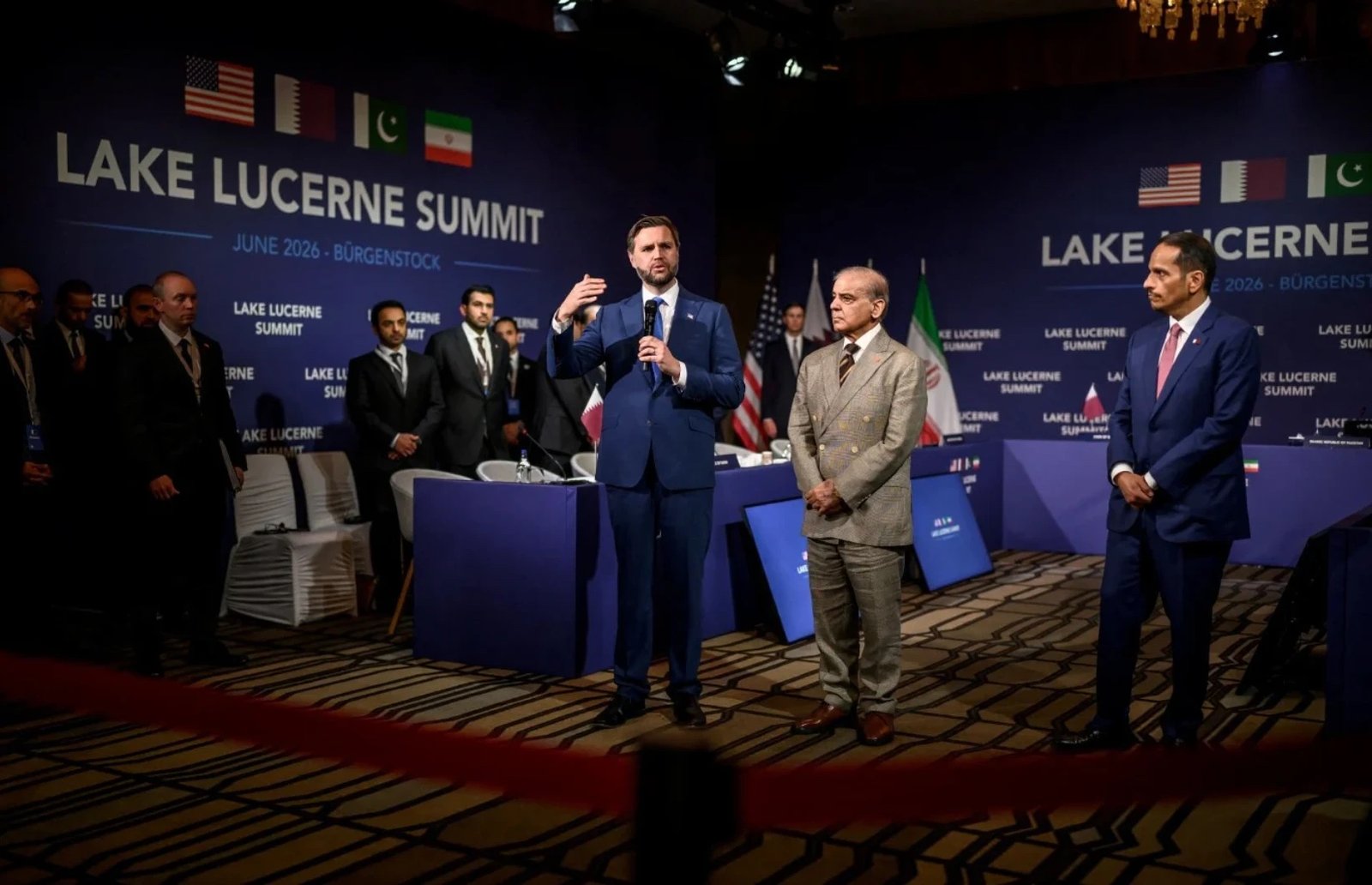
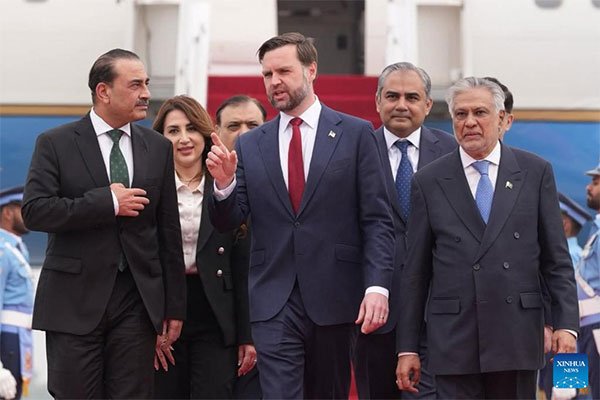
The ordinariness is the point. The shift in US-Pakistan relations over the past eighteen months is not visible in the summit photographs. It is visible in the small, consular, commercial accumulation of a relationship that two governments have decided, after fifty years of mutual misunderstanding, to attempt to rebuild. Whether they succeed depends on whether both capitals can do something neither has done well before. Washington has to accept Pakistan as a state with its own interests, its own geography, and its own threat environment, rather than as a platform whose permission is convenient. Islamabad has to convert what is currently a fortunate alignment of personalities into an architecture that survives the next political transition in either capital.
The opportunity is real. It is also fragile, and a sober reading of the current moment has to acknowledge how fragile. The United States launched a war on Iran six weeks ago at Israel's insistence, in which thousands have been killed. Pakistan now hosts US-Iran negotiations inside that environment, and Pakistani public opinion will read American intentions through the lens of what the United States has just done. The shift in US-Pakistan relations, which has been building over the past year, predates this war and is independent of it. If anything, the war is a setback that deepens the mistrust the relationship has been working to overcome. Working with Pakistan to bring the war to a close, on terms that serve regional stability rather than American convenience, is one way Washington can begin to repair the optics. It will not erase them quickly. The Pakistani public is not pivoting toward the United States because of a tariff settlement and a few warm summit photographs. The shift is real at the elite and operational level. At the public level, it is contingent on Washington behaving over a sustained period in ways it has historically not behaved.
The Fifty-Year Misreading
Pakistani scepticism of American partnership is not emotional. It is empirical. The country's institutional memory contains six discrete ruptures across five decades, each of which Washington treated as an isolated incident and each of which Islamabad registered as confirmation of a pattern. The 1965 arms embargo on a treaty ally. The 1971 abandonment, when Pakistan lost half its country while its supposed superpower partner watched. The 1989 walk-out after the Soviet withdrawal, leaving Pakistan with three million Afghan refugees and the institutional infrastructure of what would later become the Taliban and Al-Qaeda. The 1990 Pressler sanctions, when Pakistan paid for F-16 aircraft it never received, despite having already delivered on a decade of services to the United States that no other partner could have provided. The 1998 nuclear-test sanctions, lifted on India within months and on Pakistan only when post-9/11 utility made the lifting convenient. The 1999 Kargil episode, when Bill Clinton instructed Nawaz Sharif to withdraw without reference to the underlying Kashmir dispute. And then the extended 2001 to 2018 phase, which contained the drone programme, the Raymond Davis affair, the Abbottabad raid, the Salala incident in which NATO aircraft killed twenty-four Pakistani soldiers, and the Trump first-term tweet that informed Pakistan it had given the United States "nothing but lies and deceit."
Six rupture points. One coherent pattern. The pattern is that the United States arrives in Pakistan when it needs Pakistan, extracts what it requires, and departs. Robert Gates named this honestly at a Pentagon press conference in 2010. Pakistanis, he said, "vividly remember us walking out in 1989." He was right. The men who would run Pakistan in the 2020s had been junior officers in 1989. They remembered. They are remembering now.
What Washington consistently misread was the structural logic underneath Pakistani conduct. The hedging behaviours that American commentary called the "double game" were not bad faith. They were the rational response of a smaller state managing a larger neighbour on its longest border, a porous frontier with a country the United States had transformed by invasion, and a series of American partnerships that ended without warning. Pakistan's relationship with the Afghan Taliban, which dominated American complaints for two decades, was not ideological alignment. It was a strategic counter to a development Pakistan could not accept: Washington spent twenty years building an Indian-aligned state on Pakistan's most sensitive flank, with Indian consulates in Jalalabad, Kandahar, Herat, and Mazar-e-Sharif, and Indian intelligence operating freely. No Pakistani government, civilian or military, could absorb that without a counterweight. The Taliban relationship was that counterweight.
Pakistan's nuclear programme followed the same logic. In 1971, the country lost half its territory while its treaty ally dispatched a carrier group that arrived and did not engage. Within months, Zulfikar Ali Bhutto authorised the nuclear programme with the line that has defined Pakistani strategic culture ever since: we will eat grass. Pakistan chose strategic autonomy and absorbed the cost. The choice produced a sovereign defensive capacity that the country has retained for fifty years. Whatever its costs in foreign investment and diplomatic isolation, it delivered the one thing the Pakistani state has never had to negotiate for since 1971: the ability to defend itself.
The American non-proliferation architecture treated Pakistan harshly and India leniently for forty years. The 1985 Pressler Amendment was named for Pakistan. The 1998 sanctions following the Indian and Pakistani tests were lifted on India quickly and on Pakistan slowly. The 2005 US-India civil nuclear agreement effectively rewrote the international non-proliferation regime to accommodate an Indian programme that had begun with a 1974 test, while keeping Pakistan outside the architecture entirely. Pakistani commentary attributed much of this asymmetry to sustained Israeli lobbying influence on American Pakistan policy, traceable through the legislative record of the Symington, Glenn, Pressler, and Solarz amendments. The point is not that Israel is to blame for fifty years of US-Pakistan dysfunction. The point is that American Pakistan policy has, since the mid-1980s, been shaped by third-country interests that have not always aligned with American interests themselves. Any serious reset has to acknowledge this.
The drone programme requires its own treatment, because it became the single most visible driver of contemporary Pakistani anti-American sentiment, and because its actual record is more complex than either capital's public narrative ever permitted. The programme operated inside Pakistan for fourteen years, from 2004 to 2018. Roughly 430 strikes. The American figures put deaths between 2,500 and 4,000. Pakistani records, drawn from local administration, journalism, and tribal jirga documentation, place the toll significantly higher and the civilian share larger than American counts acknowledge. The downstream consequences were larger still. The radicalisation that followed, the entrenchment of the TTP, and the extremist violence that swept Pakistan across the decade that followed cost the country between 70,000 and 80,000 civilian lives. The drone programme had three distinct phases. The first, from 2004 to roughly 2011, was the indiscriminate phase. Signature strikes, funeral strikes, follow-up strikes on rescue workers, and a target list dominated by American priorities in Afghanistan rather than Pakistani priorities inside Pakistan. The second phase, from 2011 to 2014, saw gradual convergence as TTP commanders increasingly appeared on the target list. The third phase, from 2014 to 2018, saw substantive TTP decapitation. Mullah Fazlullah, the architect of the 2014 Peshawar school massacre that killed 132 children, was killed by a US drone in 2018. His death was a direct Pakistani strategic benefit. The Pakistani public never learned it as such, because by 2018 a decade of civilian-casualty imagery had set the programme's reputation in concrete. You could not put lipstick on that pig. Pakistan's own communications failures compounded the problem. Pakistani governments could not publicly defend a programme they were partly cooperating with. The ISI took credit for successes in which drones had been decisive. The American preference was for deniability. The result was a Pakistani public that experienced the programme as pure injury when its operational ledger had become, in its later years, more mixed.
The current Afghan situation validates the original Pakistani strategic analysis. India is once again aligning with the Afghan government, this time the Taliban regime Washington walked away from in 2021. Pakistan is now conducting direct military operations inside Afghanistan against TTP networks sheltering across the border. The strategic concern Pakistan raised for two decades, that India would use Afghanistan as a platform against Pakistan, has not gone away. It has reappeared in a different configuration. Pakistan is now doing what the drones did, but on Pakistani terms, against targets Pakistan has chosen, under Pakistani command, with accountability to Pakistani decision-makers. The strategic logic Pakistan asked Washington to understand for two decades is the logic Pakistan is now executing on its own.
There is one more piece of the diagnostic that the piece must name plainly, because it is the area where American framing has done the most damage to American interests. Pakistani extremism is not a civilisational fact. It is a downstream consequence of policy choices, many of which Pakistan was asked by Washington to execute. The Afghan jihad of the 1980s, funded by the CIA and operationalised through the ISI, produced the institutional infrastructure that would later become the Taliban and Al-Qaeda. The post-9/11 war radicalised the frontier. The drone programme generated a documented recruitment effect that American scholars, including Madiha Afzal at Brookings and Aqil Shah, mapped systematically. The 1989 abandonment left Pakistan to manage three million refugees and a militarised frontier without the resources to do either. Pakistan did not generate this extremism unilaterally. It was asked to produce it, then asked to clean it up, then blamed for its persistence.
The single most important fact about extremism in Pakistan is that its victims were overwhelmingly Pakistani, and the forces that defeated it were overwhelmingly Pakistani Muslim. More than 80,000 Pakistanis have died in terrorism since 2001. Soldiers, police, children, worshippers in mosques and churches, students, journalists. The Pakistani counterterrorism effort was a Muslim-majority society defending itself against a violent fringe that Pakistani religious mainstream rejected. Operation Zarb-e-Azb in 2014 cleared North Waziristan when most external analysts thought the territory could not be cleared. Radd-ul-Fasaad consolidated the gains nationally. Violence dropped substantially. The technical lessons from this work, integrated civil-military command, intelligence-led operations, terrorism financing disruption, post-operation rehabilitation, are transferable and useful to other states facing organised political violence. Any Western framing that flattens this record, that treats Pakistani counterterrorism as the work of an alien military operating against its own population, serves the extremist recruitment narrative. The accurate frame is the opposite. Pakistan demonstrated that violent extremism can be defeated by a Muslim-majority society on its own terms, and that the political conditions which generate extremism are addressable through policy rather than civilisational pressure.
What Changed
The shift of the past eighteen months has multiple causes, and the credit belongs in roughly equal measure to a Trump administration that has been pragmatic where its predecessors were not, and to a Pakistani civilian-military leadership that read the opening correctly and moved decisively to capitalise.
Operation Sindoor in May 2025 was the structural turning point. Pakistan's four-day military performance against India settled questions about Pakistani capability that some external analysts had spent years trying to keep open. The conflict was managed by Islamabad with discipline, ended on Pakistani terms, and demonstrated a level of operational competence that reset American institutional assumptions about what kind of partner Pakistan was. After Sindoor, Pakistan was no longer a failing state in need of aid. It was a functioning regional power with demonstrated capability, managing its own escalation ladder.
The capture of the Abbey Gate bombing suspect, the man responsible for the attack that killed thirteen American service members during the 2021 Kabul evacuation, gave the Trump administration a concrete counterterrorism deliverable it could cite to Congress. General Michael Kurilla, then commander of US Central Command, testified that Pakistan had been a "phenomenal partner in the counterterrorism world." The phrase was not rhetorical. It was an institutional statement that contradicted a decade of American commentary about Pakistani perfidy, and it gave the administration political cover for the recalibration that followed.
The July 2025 tariff settlement reduced Pakistan to 19 percent while India was hit with 25. Pakistan brought specific deliverables to the table. Counterterrorism cooperation, oil and minerals access, crypto and digital-asset engagement that the Trump administration prioritised early. The minerals architecture followed. The US Export-Import Bank's $1.25 billion commitment to Reko Diq, announced by Baker personally, was the only non-US project in the entire Project Vault initiative aimed at securing critical mineral supply chains. The September 2025 White House meeting between Sharif, Munir, Trump, Vance, and Rubio formalised what had been a quiet operational rapport. Trump's repeated public praise for "my favourite field marshal" was, beneath the rhetoric, a serious signal that the personal channel between the American administration and the Pakistani military leadership was operating at a level of trust unmatched since Zia.
The India-Pakistan ceasefire that Trump credits himself with brokering, repeatedly and publicly, was the next inflection. The Iran mediation followed. Pakistan inserted itself into the most consequential regional file of the year and emerged as the only state Washington and Tehran both trusted to host the room. The Islamabad Talks of last week, twenty-one hours of direct US-Iran engagement, produced a near-final memorandum of understanding that Iran's foreign minister named publicly: the Islamabad MoU. The document was not signed. It is being worked on by Pakistani, Turkish, and Egyptian mediators as this is written. Whether it is ever signed under that name, and whether the next round of negotiations happens in the same room, the diplomatic capital Pakistan has accumulated in this single episode is substantial.
The pragmatism in this sequence is bilateral and it deserves to be named. The Trump administration, whatever else one thinks of its conduct, has been the first in fifty years to engage Pakistan on Pakistan's own terms rather than on Washington's preferred terms. Pakistani leadership, civilian and military, recognised that the window with this specific administration was open in a way previous windows had not been, and acted. That is what serious statecraft looks like on both sides.
Why Pakistan Matters
The case for treating this moment as an opportunity rather than a transaction rests on what Pakistan brings to the table when its strategic inventory is read seriously. Five axes.
The first is geography. Pakistan sits at the seam of four strategic theatres. South Asia, through its border with India. Central Asia, through the Wakhan corridor and the corridors that connect the Stans to the Arabian Sea. West Asia, through its border with Iran and its proximity to the Gulf. Maritime Asia, through its Arabian Sea coastline and Gwadar's location near the Strait of Hormuz. No other US partner holds that combination. Turkey holds two of the four. Saudi Arabia holds one. India holds one. Pakistan holds all four simultaneously, and has done so since 1947.
The second is what proximity actually delivers. Pakistan's intelligence and diplomatic services have working operational knowledge of Iran that no American agency possesses. Its networks in Afghanistan, including with the current Taliban government, are operational in ways Washington's are not and will not be for a generation. Its relationship with Saudi Arabia sits inside a mutual defence pact signed in September 2025. Its relationship with China is decades old, structurally stable, and not going away. Its ties to the Gulf monarchies run through trade, labour remittances, and family networks that Washington could not replicate in a decade of effort. Pakistan is a node in the regional network in a way no other state currently engaged with Washington is.
The third is diplomatic capability. The Iran mediation is the proof point. Pakistan did what the United States, the United Kingdom, the European Union, Russia, and China could not do: it got both sides into the same room for the first sustained engagement since 1979. That capability is not improvised. It is the accumulated product of fifty years of hosting the Organisation of Islamic Cooperation, managing the Afghan and Iranian files, and maintaining quiet channels to every capital in the region. The American foreign service has lost the muscle memory for this kind of patient, deniable mediation. The Pakistani service has not.
The fourth is capability. Pakistan is a nuclear power with the seventh-largest armed forces in the world, the only Muslim nuclear state, and a non-proliferation record that distinguishes it from every other state that has acquired the capability outside the original five. Operation Sindoor in May 2025 demonstrated this capability against a peer adversary in live combat, on terms Pakistan set. The Pakistan Air Force operates American and Chinese platforms in integrated configurations no other air force has managed, and is poised to receive fifth-generation fighters from both China and Turkey, which will make it the only air force in the world operating fifth-generation aircraft from two distinct production lines. Pakistan is also the only state to have successfully tackled large-scale guerrilla insurgency on its own territory and defeated the extremist networks that the wars in Afghanistan produced, before the Afghan Taliban's 2021 return reopened that file. The combination of nuclear capability, demonstrated conventional performance, multi-platform air power, and proven counterinsurgency experience is a strategic inventory that no other US partner in the region holds.
The fifth is minerals. The Reko Diq deposit is among the world's largest undeveloped copper-gold projects. The Chagai belt holds proven and probable reserves valued at $60 to $74 billion. The strategic answer to the China critical-minerals supply chain question, which American policy has been searching for since the export restrictions of 2025, runs partly through Pakistan. The Export-Import Bank's selection of Reko Diq as the only non-US Project Vault investment was an institutional bet that this matters.
A state with this strategic inventory has priced itself. The American error of the past fifty years has been to consistently underprice it, treat it as cheap, and then express surprise when the relationship collapsed. The current moment is the first in a generation in which both capitals appear to understand the actual valuation. What they build on that understanding is the question.
The Cultural Substrate
Beneath the strategic case sits a cultural foundation that American policy commentary almost never notices. Six million Pakistani-Americans live in the United States. They are integrated, professionally productive, and politically active. Abbas Haider, whose company Aspetto contracts with the US Department of Defense and who Baker attended the wedding reception of in October 2025, is one example. The doctors, the engineers, the Silicon Valley founders, the academics, the professors. This is a demographic bridge that runs deep.
English is the language of Pakistani elite and commercial discourse. The country runs on common law. Its parliamentary system, imperfect and frequently disrupted, draws on Westminster. Its middle class reads American novels, watches American films, and sends children to American universities when it can. Kamila Shamsie's Home Fire won the Women's Prize for Fiction. Mohsin Hamid has been shortlisted for the Booker. Mohammed Hanif is published by serious New York houses and reviewed in the New York Review of Books. Arooj Aftab won the Grammy for Best Global Music Performance and has been nominated seven times. Sharmeen Obaid-Chinoy has two Oscars. Pakistani universities, LUMS, IBA, Aga Khan, hold active partnerships with Harvard, Stanford, Georgetown, MIT.
Ten million Pakistani parents want their children to study at American universities. That demographic foundation is one of the single most underexploited assets in the entire bilateral relationship.
What Permanent Looks Like
The constructive case begins with the recognition that the current moment is the first in fifty years that contains the conditions for a permanent relationship rather than a transactional one. The pragmatism is real. The interests are aligned. The personal channels are operating. What is missing is the architecture that converts these conditions into something that survives the next political transition in either capital.
Five elements would constitute that architecture.
The first is the institutionalisation of what is currently personal. The Munir-Trump-Witkoff channel is valuable. It is also a single point of failure. A Strategic Dialogue structure with standing working groups, the format Washington uses with serious partners, would convert personal rapport into institutional process. The working groups should cover defence, counterterrorism, trade and investment, energy and minerals, cultural and educational exchange, and the specific question of regional mediation given Pakistan's emerging role in that space. The Dialogue should meet quarterly, produce documented outputs, and report to political leadership in both capitals. Without this, the relationship remains hostage to the next election in either country.
The second is the proper pricing of Pakistani deliverables. Mineral access, Iran mediation, counterterrorism cooperation, maritime access, and the broader regional convening capability Pakistan has demonstrated. These are not favours. They are services with strategic value. They should be exchanged for durable frameworks: technology transfer agreements that survive administrations, market access provisions written into legislation rather than executive orders, security cooperation memoranda that include the kind of binding language Pakistan has previously lacked. The 1990 F-16 episode is the cautionary tale. Pakistan paid for capability and received storage fees instead. Any new architecture has to be structured so that this cannot happen again.
The third is the separation of the trade relationship from the security relationship, and the engagement of Pakistan on its own merits, in formats appropriate to what it brings. The strategic logic that produced earlier framings belonged to a different era. Pakistan can be engaged on its own terms, in its own right, on the basis of what it offers. The Trump administration has, in practice, moved in this direction. Institutionalising it is the next step.
The fourth is investment in the perception infrastructure that determines whether the elite-level shift can travel down to public opinion. Pakistani public scepticism of the United States will not be rebuilt by good intentions. It will be rebuilt by sustained American behaviour visible to ordinary Pakistanis in their own cities, over a sustained period. The Fulbright programme. The Humphrey programme. USAID projects in Balochistan and Khyber Pakhtunkhwa that ordinary Pakistanis can see. Visa and consular generosity. Cultural and educational exchange at scale. Baker has begun this work at the embassy level, and the regional engagement she has prioritised, in Sindh, Punjab, and Khyber Pakhtunkhwa, is exactly the right model. It needs to be scaled, funded, and given political backing in Washington.
The fifth is the hardest, because it is what the United States has consistently failed to do. Honour the commitments when the cycle turns. Pakistan has been told, six times in fifty years, that this relationship will be different. Each time it has ended the same way. The seventh iteration is the test. If, when the next crisis hits, the next administration arrives, or the next inconvenient Pakistani choice gets made, Washington reverts to the pattern of extracting and departing, then the work being done now will join the previous five entries in the institutional memory that drives Pakistani strategic scepticism. The damage will be deeper because the expectations were higher. There is no version of this relationship that can survive a seventh repetition of the same cycle.
The reciprocal obligation runs through Islamabad. Pakistan has to deliver on governance, particularly in Balochistan, where the Reko Diq project will become a model or a cautionary tale depending on whether revenue-sharing and local benefit are visible and audited. Pakistan has to address the federal-provincial frictions that the 2025 minerals legislation surfaced. Pakistan has to manage the China-United States balance with the diplomatic skill the moment requires, which means being honest with both partners that strategic hedging is not betrayal of either. Pakistan has to professionalise its communications about what it is doing and why, both domestically and internationally, in ways the country has historically struggled with. The current Pakistani leadership has demonstrated, across the past eighteen months, that it can do these things. The question is whether the capacity outlasts the people currently holding the relevant offices.
A relationship that has failed three times in fifty years has, for the first time in a generation, the conditions to succeed. The personalities are aligned. The interests are aligned. The strategic logic is clear in both capitals. The historical reading on which Pakistani scepticism is based is being addressed, slowly and incompletely, by an American administration willing to engage Pakistan on Pakistani terms. The architectural work has not yet begun.
The window will not stay open indefinitely. American administrations change. Pakistani crises arrive on their own schedule. The next eighteen months are when the conversation either becomes structure, or becomes another entry in the institutional memory that has shaped fifty years of Pakistani caution.
For the first time in a generation, both capitals have leaders who understand what is actually available. Whether they build something permanent, or repeat the cycle for a fourth time, is the question that the next eighteen months will answer.
Originally published on X by @DanQayyum — read the original post →