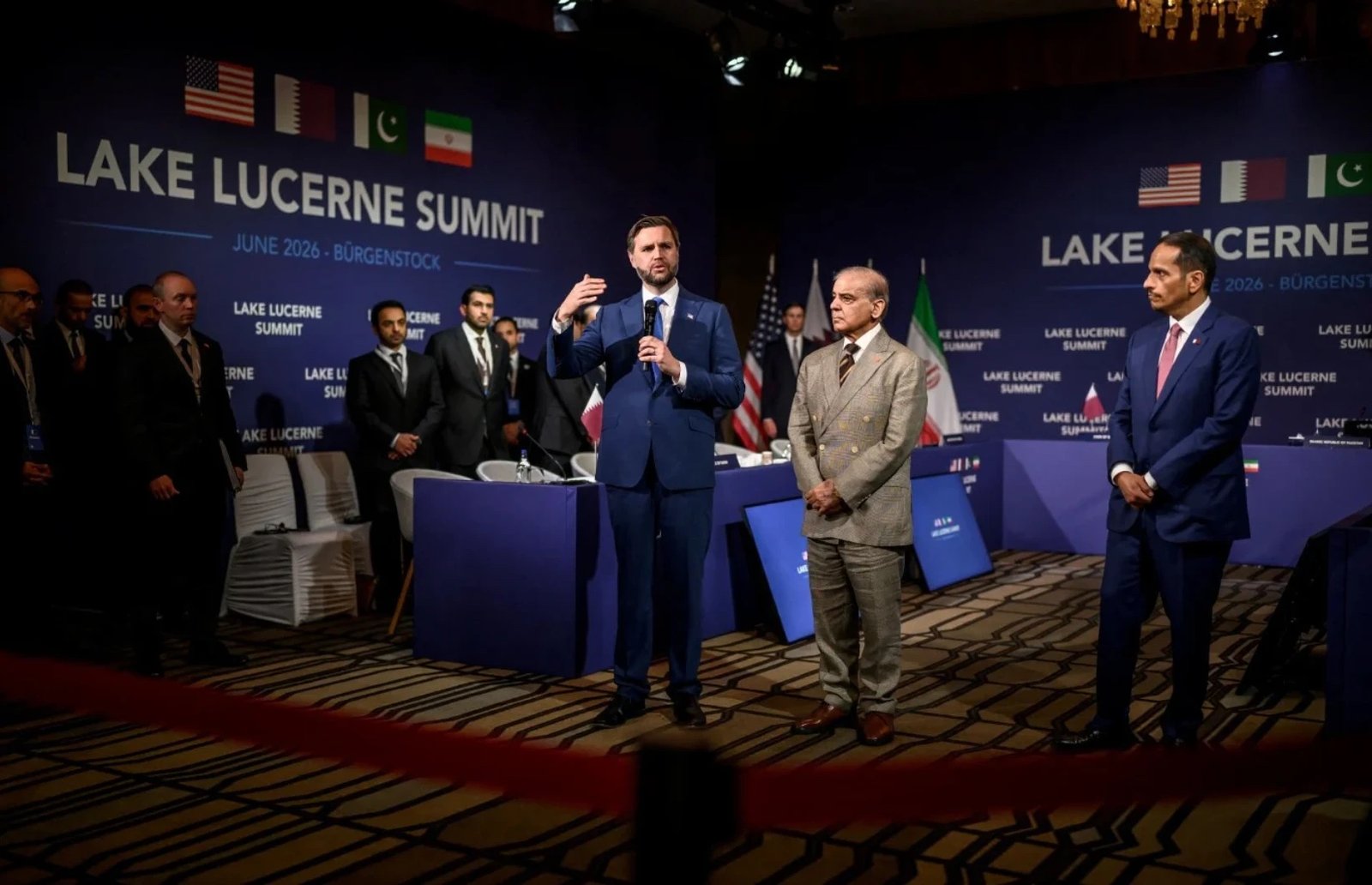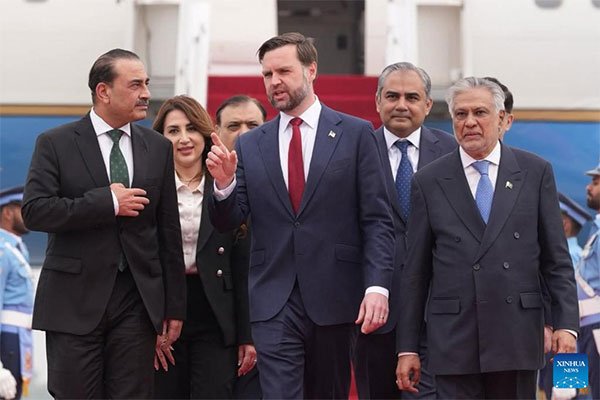
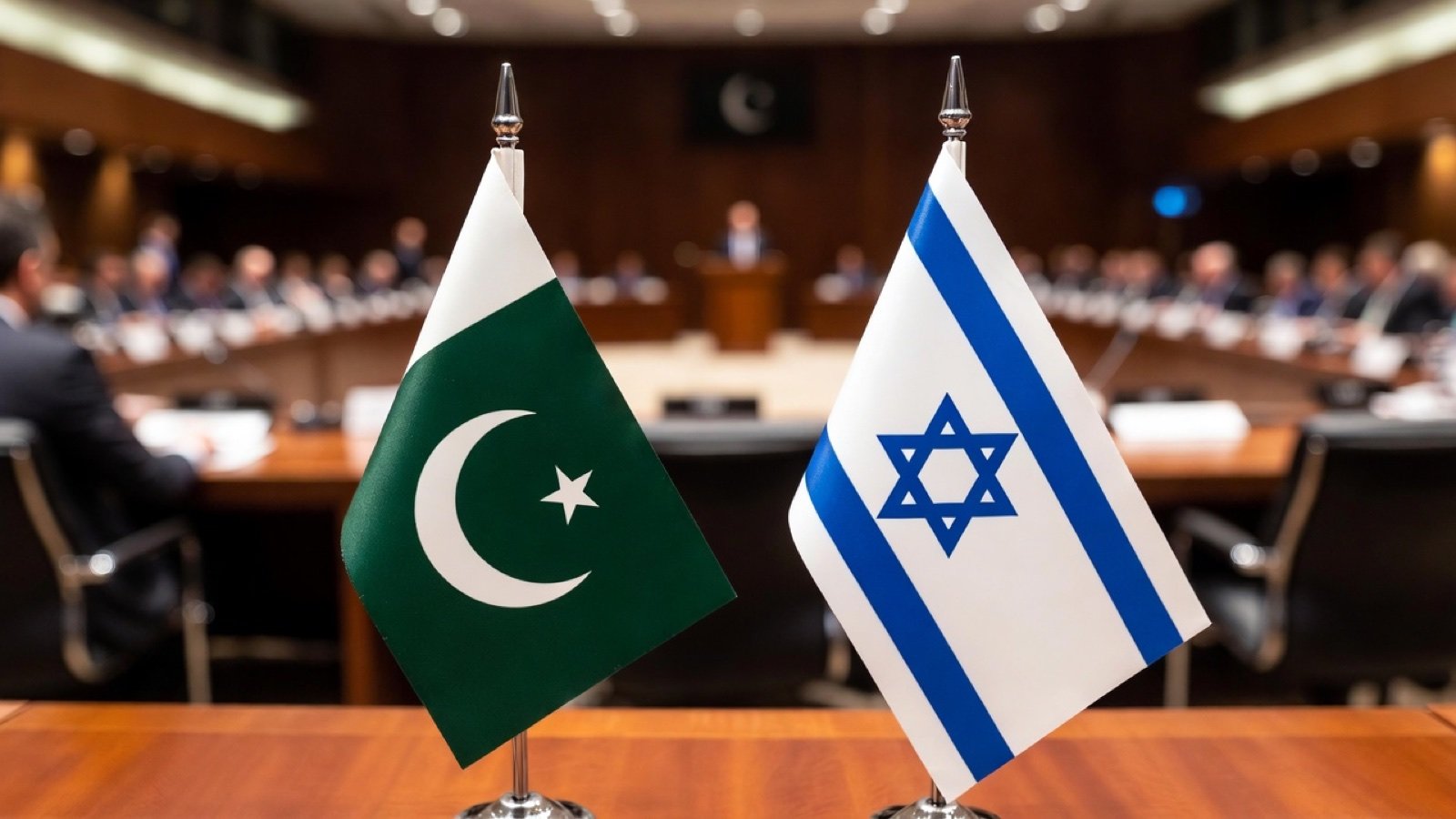
Pakistan does not maintain diplomatic, trade, or consular relations with Israel and has indicated it will not change that position under the Abraham Accords framework demanded by US President Donald Trump on 25 May 2026. In a post on Truth Social, Trump named six Muslim-majority countries without diplomatic ties to Israel (Pakistan, Saudi Arabia, Qatar, Turkey, Jordan and Egypt) and said it should be "mandatory" that they join the Accords. Pakistan was named first in subsequent media coverage. The Pakistani Foreign Office has not formally responded. Senior officials, speaking on background, have indicated the position remains unchanged.
Background
Pakistan's position has been unchanged since the country's founding. Pakistan was established in August 1947 as a homeland for South Asian Muslims; Israel was established in May 1948 as a homeland for Jews. The two states have never exchanged diplomatic recognition. Pakistani passports carry the endorsement "Valid for all countries except Israel." Pakistan has voted with the Arab and Islamic bloc on major UN resolutions concerning Israel and Palestine. The founding statement on the matter was made by Muhammad Ali Jinnah in 1947, prior to Israel's declaration of statehood. Jinnah stated that Pakistan would not recognize Israel until Palestinian rights were restored. Every Pakistani government since has retained that position.
Combat history
Pakistani Air Force pilots have engaged the Israeli Air Force in combat on two documented occasions. In November 1966, the PAF deputed Flight Lieutenant Saiful Azam to the Royal Jordanian Air Force as an advisor. On 5 June 1967, the first day of the Six-Day War, Azam shot down an Israeli Dassault Mystère IV while flying a Hawker Hunter over Mafraq airbase in Jordan. Two days later, transferred to the Iraqi Air Force at H-3 airbase, he shot down a Vautour IIA and a Dassault Mirage III. He received decorations from Jordan, Iraq, and Pakistan. Other PAF pilots, including Flight Lieutenant Sarwar Shad, served with the Royal Jordanian Air Force in the same period. On 26 April 1974, during continued Israel-Syria air engagements following the October 1973 Yom Kippur War, PAF Squadron Leader Sattar Alvi, on deputation to the Syrian Arab Air Force, shot down an Israeli Mirage while flying a Syrian MiG-21. He was decorated by Syria.
Past considerations of recognition
The Pakistani position has been publicly considered for change on two documented occasions since 2000.
The first was in September 2005 under President Pervez Musharraf. Foreign Minister Khurshid Mahmud Kasuri met Israeli Foreign Minister Silvan Shalom in Istanbul on 1 September 2005, in a meeting mediated by Turkey. It was the first publicly acknowledged ministerial contact between the two states. Musharraf cited Israel's August 2005 withdrawal of settlers from Gaza as the trigger. Both Pakistani and Israeli officials characterised the engagement as exploratory and not constituting recognition. The track did not advance and lapsed by 2007 as Musharraf's domestic political position weakened.
The second was in August 2020. Following the signing of the Abraham Accords by the UAE and Bahrain in September 2020, Prime Minister Imran Khan said in interviews with Dunya News and the Anadolu Agency that Pakistan would not follow. He cited two reasons: the Jinnah commitment, and the position that recognition of Israeli territorial claims would weaken Pakistan's diplomatic standing on Indian-administered Kashmir. The Pakistan Foreign Office issued a formal denial of any move toward recognition in November 2020. No subsequent Pakistani government has publicly reopened the question.
The May 2026 demand
The Trump administration's demand on 25 May 2026 is the third instance of direct US public pressure on Pakistan to normalize with Israel since 2020. The reported framework does not include progress toward Palestinian statehood. Saudi Arabia's position, formally articulated by Crown Prince Mohammed bin Salman in 2023 and reiterated since, makes normalization conditional on a guaranteed pathway to Palestinian statehood. Pakistan's stated condition since 1947 is the same.
The Israel-India file
The current operational constraint on any Pakistani movement toward Israel is the scale of Israel-India defence cooperation.
Stockholm International Peace Research Institute data for 2020-2024 records India as the destination for approximately 34 percent of total Israeli defence exports over the period. India was Israel's largest single arms client in each of those years.
Israel's defence cooperation directorate, SIBAT, has confirmed approximately $20.5 billion in sales to India over the same period.
In May 2025, during the Indo-Pakistan military exchange following the Pahalgam attack, Pakistani forces engaged Israeli-manufactured Harop loitering munitions, produced by Israel Aerospace Industries, over Karachi, Rawalpindi, and Lahore. Pakistan reported downing 25 Israeli-manufactured Indian drones.
In February 2026, Indian Prime Minister Narendra Modi visited Jerusalem and concluded defence agreements reported at $8 billion to $10 billion. Items reportedly included IAI Hermes 900 drones, Rafael SPICE 1000 guidance kits, Elbit Rampage air-to-ground missiles, Ice Breaker naval cruise missiles, and IAI Air LORA missiles.
In December 2025, Israel and India announced the establishment of Israeli defence manufacturing inside India under the Make in India framework. Indian and Israeli media reporting framed the arrangement as a posture against Pakistan and Turkey.
Pakistani security officials have privately cited this arms relationship as central to Islamabad's reluctance to normalize with Israel under the current framework.
Other constraints
Three further constraints are cited consistently by Pakistani officials and outside analysts.
The Kashmir parallel. Pakistan's diplomatic position on Indian-administered Kashmir relies on the principles that territorial acquisition by force is not legitimate and that the right to self-determination is universal. Pakistani officials have argued that recognition of Israeli claims would weaken these principles by analogy.
The Iran mediator credential. Pakistan's standing on Palestine was reported by US, Iranian, and Pakistani sources as a structural reason Iran accepted Pakistani mediation in the framework finalized in May 2026.
Public opinion. Pew Research polling has consistently shown Pakistani favourability ratings toward Israel below 5 percent over the past two decades. No major Pakistani political party, religious or secular, has campaigned on a recognition platform in any electoral cycle.
European context
European Union member states have moved on Palestinian statehood without moving on the broader Israel question that the Abraham Accords ask of Pakistan. At the September 2025 UN General Assembly, the United Kingdom, France, Canada, Australia, Portugal, Belgium, Luxembourg, Malta, Monaco and Andorra formalized recognition of the State of Palestine. Sixteen of 27 EU member states now recognize Palestine. Norway, Spain, Ireland, and Slovenia recognized in May 2024. Europe recognizes both states; Pakistan recognizes one. On the question of Palestinian statehood, however, Pakistan's position now overlaps with the position held by most large Western democracies.
Outlook
The Musharraf engagement in 2005 demonstrated that Pakistani recognition can be considered under specific conditions. The stated condition is a Palestinian state on terms acceptable to Palestinians. The current US framework does not propose such a state. Senior US officials have not indicated that such a track is being prepared.
Pakistani recognition of Israel under the current framework is unlikely. The position is supported by historical practice, a documented military and diplomatic record, current security factors, and consolidated domestic political opinion. A change in position would require either substantial restructuring of the US framework to include Palestinian statehood, or an unprecedented shift in Pakistan's domestic political consolidation. Neither is currently indicated.
Originally published on X by @PKPlaybook — read the original post →