
The messages come most weeks. They arrive from accounts I have never heard of, the kind that post cricket highlights one hour and a clip of an Indian minister the next, and they are usually about the same thing. My water. They write to tell me India has finally shut it off, that my taps have run dry, that my children will die thirsty. One of them, recently, in a kind of triumphant good cheer: now you and your kids can die of thirst, we have shut your water.
I used to find them ugly. Now I find them useful. They show me what a billion people have been told about the rivers, and how completely most of them have believed it.
The Belief and How It Is Built
Many Indians believe Modi has shut the tap. They believe it the easy way, the way people believe things they have never had to check, because the man who told them runs the country and the channels that might have corrected him are the channels that amplify his rhetoric in the first place.
The belief is a built thing, assembled the same way each time. A policy gets decided somewhere near an election. It is announced with as much theatre as the moment will carry. Television runs the announcement for a week, and almost nobody, on screen or off it, goes back six months later to ask how the thing actually turned out. By the time it has failed in the field, the audience has filed it as a win and moved on.
We watched the full cycle in May of last year. India named an operation, promised the world a reckoning with Pakistan, and came out of four days of fighting with very little that matched the billing. None of that dented anything at home, where the promise had run on a loop and the result was barely reported.
The water claim was assembled on the same line. This is a treaty that has already lived through a great deal. The Indus Waters Treaty held through the war of 1965 and the war of 1971. It held through Kargil, through the long standoffs, through every winter the two armies spent staring across the line. Water stayed out of all of it, by design, for sixty-five years. What India now points to, to justify walking away, is the Pahalgam attack of April 2025, for which it has shown no evidence to Pakistan, to any international body, or to its own public. A treaty that held through two full wars is being abandoned on the strength of an accusation India will not put on the table. The timing, and the empty file behind it, give the performance away.
The Act Beneath the Noise
Underneath the noise there is an actual act, and a serious one. In April of last year, after the attack at Pahalgam, India announced it was holding the Indus Waters Treaty in abeyance. That word, abeyance, appears nowhere in the treaty. The document was signed in 1960, brokered by the World Bank, and the men who drafted it gave it no exit clause and no suspension clause, because the entire purpose of the thing was to stop one government, on one bad morning, from doing exactly what India is now trying to do.
India cannot lawfully suspend this treaty. The text gives it no way out, which is exactly why the text exists. What India can do, and has done, is break the treaty and go on breaking it, behind a word chosen to make the breach sound procedural.
Even the World Bank, which midwifed the treaty and keeps a procedural role in it, said as much. Its president, Ajay Banga, stated plainly that the treaty contains no provision for suspension at all, and that the only lawful routes are to replace it by mutual agreement or to end it by mutual agreement. Abeyance is a word India reached for to describe something the document does not permit.
The Bad Faith Came First
The announcement did not come out of a clear sky. For years before April 2025, India had been hollowing the treaty out from the inside, plain to anyone who tracked how it actually behaved within the treaty's own institutions.
When disputes arose over Indian dam designs on the western rivers, at Kishanganga and at Ratle, India spent years trying to route them away from the binding Court of Arbitration and toward a neutral expert whose findings carry less weight. When Pakistan secured the Court of Arbitration regardless, India refused to take part in it. The Permanent Indus Commission, the standing body where the two countries are meant to meet and exchange data, was allowed to wither. River data India is obliged to hand over came late, came thin, or did not come.
By the time the abeyance announcement came, it changed the label more than the conduct. India had been treating the treaty as optional for a decade. Abeyance only said out loud what its behaviour had been saying quietly for years. Pakistan's own climate minister, Musadik Malik, put the legal heart of it plainly: there was no provision in the treaty for unilateral action, "and yet this treaty was put in abeyance." There was nothing wrong with the treaty. It was abandoned because abandoning it served a purpose in Delhi.
The Seminar India Tried to Stop

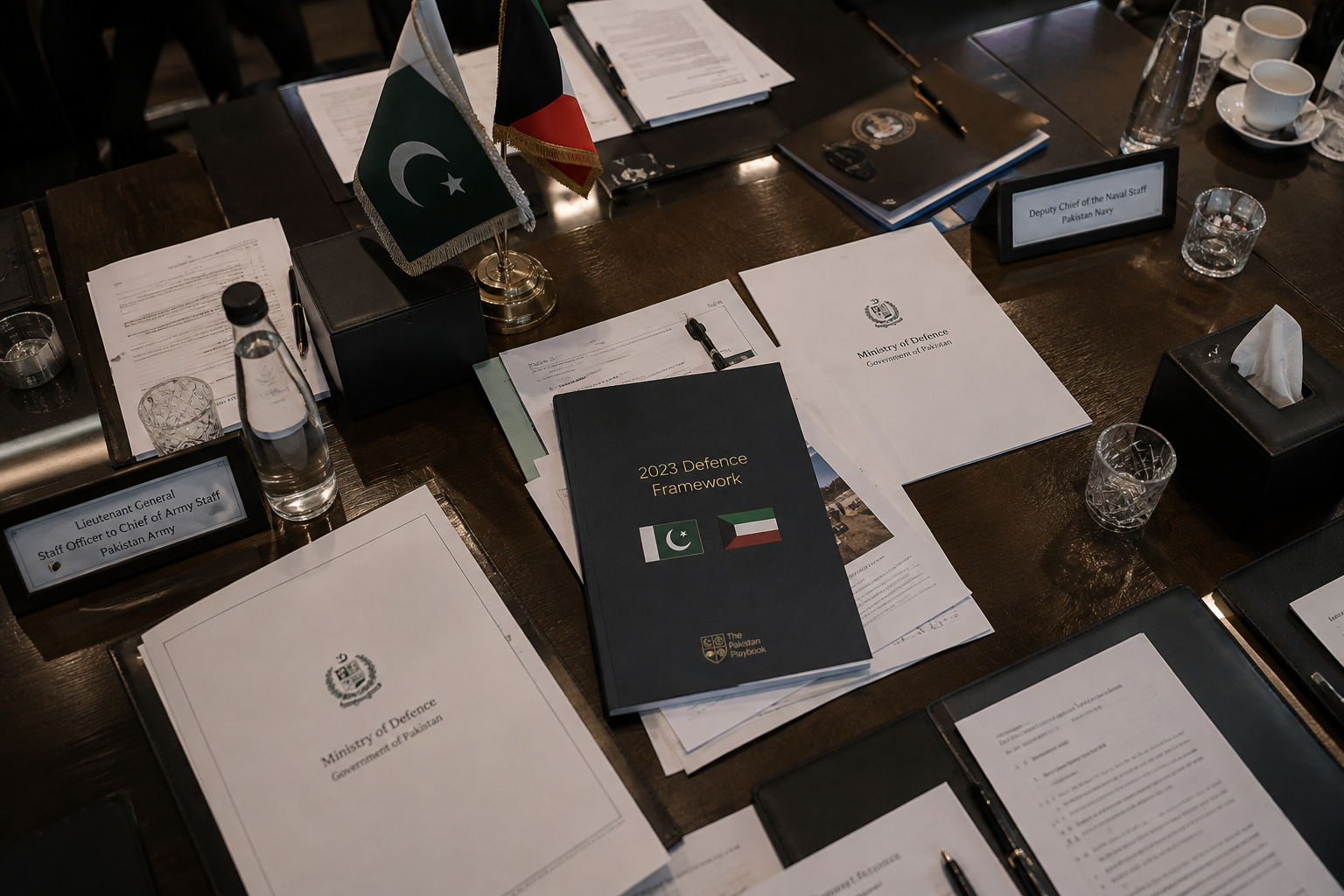
I made this argument last week in Brussels, on a panel the Centre for European Policy Studies convened with the Pakistani mission to the European Union, on what happens when shared rivers are turned into weapons. India's real answer to the seminar came before any of us had spoken. According to diplomats involved, New Delhi spent the run-up trying to get the event called off, lobbying against the idea that European policy people should sit in a room and discuss water governance at all. A government confident its conduct will survive scrutiny does not work this hard to keep the scrutiny from happening.
What that scrutiny would have found is a clean record on one side. Pakistan took its objections to the Permanent Court of Arbitration, the forum the treaty itself provides. The court ruled. It held that India's unilateral abeyance has no legal effect, that the treaty remains fully in force, and that the court keeps its jurisdiction whether India appears or not. In May this year it went further, placing firm limits on how much water India may hold back behind its hydropower dams on the western rivers. On the law, Pakistan has won every round that has been adjudicated.
India's response to losing in court was to attack the court. It called the tribunal illegally constituted, declared its rulings null and void, and stayed away from the proceedings. A country that answers a ruling it dislikes by calling the courtroom illegitimate and refusing to appear has placed itself outside the system it once agreed to be judged inside.
Feisal Hussain Naqvi, who once represented Pakistan on this treaty and sat on the Brussels panel, has pressed the legal core throughout. A treaty that contains no provision for suspension cannot lawfully be suspended, and a state that boycotts the court does not get to overturn its ruling by staying away.
Why This Is Not Only About Water
This is why three rivers in South Asia now sit on the desk of every government that has ever relied on a signature holding.
If a state the size of India can put its name to a binding treaty, break it, reject the court built to settle the breach, and pay no price worth the name, the lesson does not stay inside the subject of water. It reaches every bilateral instrument two states have ever signed and called binding. A trade agreement is a piece of paper with a dispute mechanism inside it. A border accord is the same kind of paper. So is an arms-control deal, or a ceasefire. Each rests on the same quiet assumption, that the stronger party will stay bound when staying bound stops being convenient. The Indus is now the live test of whether that assumption holds, and the answer being written so far is no.
Malik gave the case its proper name when he called it "the revelation." What it reveals is the resale value of every guarantee a smaller country has ever been handed by a larger one. The precedent travels. It reaches the Mekong, the Nile, the rivers of Europe the continent has stopped thinking of as political. It also travels home to India, which sits downstream of China on the Brahmaputra, and which has spent a year teaching its own upstream neighbour exactly how a powerful state handles a water treaty it finds inconvenient.
Slow Enough to Escape the Law
The harm has already started, and it looks nothing like the version in the threatening messages. Nobody has switched off a river, and for now nobody can. The storage needed to hold the western rivers back in any decisive way does not yet exist on the Indian side, and the dam programme that would build it is years from maturity. That gap is the only reason the water is still flowing. The damage available without that infrastructure is a quieter kind, and in a country that lives off its harvest it is a weapon in its own right. Uncertainty.
Since the announcement, India has stopped passing on the river data the treaty obliges it to share, the same data Pakistan needs to see its own floods coming. It has run the western rivers in a way that delivers both extremes, a sudden release when its reservoirs fill and a drawdown afterward that pulls the flow toward nothing. On the Chenab last August, India opened the gates at Salal and sent a surge across the border that Pakistani officials say arrived with no formal warning. That was one episode among several.
Pakistan's recent flood seasons have been the worst in living memory, the dead numbering in the thousands across them. Most of that killing was done by the rain and by the glacial lakes bursting in the mountains, and it would be wrong to lay those deaths at India's door. The treaty, though, was built for exactly those seasons. Its job was to keep the rivers survivable when the water came hard, to coordinate the releases and carry the warnings across the border in time for a family to move. That coordination is what India switched off.
So here is the question the international system would rather not answer. A treaty exists to keep a shared river from drowning or starving the people below it. One government has repudiated that treaty in defiance of its terms, stopped sharing the data, and runs the flow to suit its own reservoirs, through the worst flood years on record. When the bodies appear downstream because the warning never came, the law goes quiet, and what the law cannot name it does not punish. The world keeps its hardest responses for harm that is fast and filmed. A flood passes for weather and a drought for climate, so slow harm in either disguise moves through the system untouched. Malik has asked the obvious next thing of every forum that will listen, that those who break water treaties face political, economic and diplomatic consequences the way violators in trade and arms control already do. So far the forums have listened politely and done nothing.
What Pakistan Does if the Law Fails
There is a habit in some quarters of the Indian discourse of treating Pakistan as the party that will, in the end, swallow whatever is done to it. The record of the last year should have ended that habit. When India struck in May of last year, Pakistan answered within minutes, and hard enough that the accounting of that exchange has not made comfortable reading in Delhi since. Water is the more dangerous subject of the two.
Pakistan's own ministers have said so, in language that needs no decoding. Asked what the country would do if water were used against it, Malik said it would respond exactly as it had to India's military action in May, "plus one." The defence minister has spoken openly of war. These are the statements of a government signalling it will treat water aggression the way it treated military aggression.
The logic underneath the rhetoric is simple and grim. A downstream country whose treaty is being torn up in front of it, whose harvest and flood season now sit in a hostile neighbour's hands, and whose appeals to the law have been heard and ignored, is left with options that are few and uniformly bad. Every one of them runs through escalation, because no state on earth will accept its water supply as a thing another government switches at will. The treaty was the instrument that kept this danger contained for more than six decades. Weaken it and the danger is back in the open, in a region where both sides hold nuclear weapons and share a live border.
Europe assumes its own rivers run under law too old to be undone. Pakistan made the same assumption for sixty-five years, right up to the morning it stopped holding. A treaty is worth what its strongest signatory decides it is worth, and that is no longer a theory anyone needs to argue. There is a case attached to it now, named for a river, available to every government that ever signed an agreement it later wished it hadn't. ■