
Column · World
Abdul El-Sayed Got Pakistan Wrong Twice in One Answer
The senator-elect mistook a state religion for an ethnostate, then pledged to cut military aid Washington mostly suspended in 2018

On Sunday 22 November, Kristen Welker put a list to Abdul El-Sayed on NBC's Meet the Press. Forty-three countries identify with a particular religion, she said. Pakistan is an Islamic republic; Denmark is constitutionally Christian. Why should the world's only Jewish state give up its identity?
The Michigan Democrat, who will be sworn in on 3 January as the first Muslim elected to the United States Senate, had his answer ready. "Well, I don't believe in ethnostates generally. I don't think we should be in the business of funding the military of Pakistan either."
Two sentences, two errors. Pakistan was never the subject of the conversation, only the nearest example to hand. By Monday the funding line was running as a headline on Indian wire services, and Pakistanis online were arguing about the label.
A Question About Religion
Welker asked about state religion. El-Sayed answered with a word about bloodlines. An ethnostate belongs to one people defined by descent, while Islam takes converts from anywhere.
The 2023 census shows what Pakistan is made of. Punjabi is the mother tongue of 37 per cent of the population, Pashto 18, Sindhi 14, Saraiki 12 and Balochi 3. Urdu, the national language, is the first language of about one Pakistani in eleven. No ethnostate chooses a national language that most of its citizens learn at school.
Who Has Run Pakistan
Benazir Bhutto, from a landowning family of Larkana in Sindh, was twice prime minister. Imran Khan, who held the office until 2022, was born to a Pashtun family. The current president, Asif Ali Zardari, comes from a Baloch family of Sindh. General Abdul Waheed Kakar, a Pashtun who died last month, commanded the army in the mid-1990s.
For eight years in the 1960s, the Chief Justice of Pakistan was Alvin Robert Cornelius, a Christian born in Agra. Rana Bhagwandas, a Hindu from Sindh, later held the same office in an acting capacity, most notably through the judicial crisis of 2007.
Ammar Rashid, a public policy researcher and writer, put it in one line the night of the broadcast. He called Pakistan "a multiethnic federation where members of all major ethnic group have been heads of state, government or military multiple times over its history."
Two Constitutions, Two Principles
Israel's 2018 Basic Law defines the country as "the nation state of the Jewish People" and reserves national self-determination to the Jewish people alone. Under the Law of Return of 1950, any Jew in the world may settle there. Nationhood in Israeli law follows a people.
Pakistan's Constitution makes Islam the state religion, and the president and prime minister must be Muslims. Citizenship is another matter. The Pakistan Citizenship Act of 1951 grants it by birth, descent or migration and asks nothing about faith. A Muslim in Dearborn has no more claim to a Pakistani passport than a Lutheran in Copenhagen.
That puts Pakistan with Denmark, in the category Welker named. Denmark's constitution establishes the Evangelical Lutheran Church and requires the monarch to belong to it.
Established religion has serious critics, and some of them spoke up this week. Mehdi Hasan replied that Pakistan "is a self-proclaimed 'Islamic republic' with laws that discriminate against non-Muslims." Matthew Yglesias called it "a religious state with discriminatory policies and a terrible human rights track-record." Each began by saying it is no ethnostate. Their charge is fair. El-Sayed made a different one.
Where Pakistan Owes Its Minorities More
The fair charge deserves a straight answer. In 1974 Parliament declared Ahmadis non-Muslim. A decade later, Ordinance XX made it a crime for them to call their places of worship mosques or to give the call to prayer. Blasphemy accusations still turn neighbours into mobs. In August 2023 one accusation in Jaranwala, near Faisalabad, ended with churches burned and Christian homes looted.
The courts saw this coming. In June 2014, after the Peshawar church bombing, the Supreme Court ordered the state to act on minority rights. Seven years on, the Centre for Social Justice estimated that at the pace so far, full compliance was 21 years away.
Parliament moved in December 2025, passing a law to create a National Commission for Minorities Rights, which President Zardari signed on 17 December. The version that passed lost its overriding clause and the commission's power to open cases on its own initiative. Restoring that power would cost little. So would funding the commission, enforcing the 5 per cent job quota for minorities, which is still largely ignored, and prosecuting false accusers. Each is a fault in how existing law is applied, and a capable state can correct it.
The Ledger, 2002 to 2018
The Congressional Research Service keeps the standard table of what Washington sent Pakistan after 9/11. Its last full edition covers fiscal years 2002 to 2018, in millions of dollars:
| Category | Amount | Share |
|---|---|---|
| Coalition Support Fund reimbursements | 14,573 | 43% |
| Economic aid | 11,326 | 33% |
| Security aid | 8,284 | 24% |
| Total | 34,183 |
The biggest line was never aid. The CRS itself calls Coalition Support Funds "technically not foreign assistance": they reimbursed Pakistan for supporting American operations in Afghanistan. Pakistan spent the money first and sent the bill. Between 2001 and 2017 it claimed $23.65 billion and was paid $14.44 billion. When Pakistan closed NATO's supply routes in 2011, Congress refused to pay for those months at all.
Some of the economic aid existed only on paper. In 2003 and 2004, $1.5 billion of it went straight to cancelling debts Pakistan owed Washington. By Islamabad's own count, civilian money actually received since 2001 came to $5.32 billion, against more than $7 billion promised.
This is the table behind Donald Trump's "$33 billion", tweeted on New Year's Day 2018. Pakistan's Economic Survey for 2016-17 puts the country's own losses from the war at $123 billion.
What Washington Sends Now
Three days after that tweet, the State Department suspended most security assistance to Pakistan, at least $900 million of it. The flow never recovered. In fiscal year 2025 Washington committed $195.8 million to Pakistan, about 98 per cent of it economic. The military share was roughly $2.9 million.
The F-16 deals that make the news are sales. The $686 million upgrade cleared last December is paid for, according to the notice to Congress, from Pakistan's "National Funds". The $397 million spared from the 2025 aid freeze pays American contractors to monitor how Pakistan uses those jets. Washington is paying to watch Pakistan's jets, and Pakistan is paying to keep them flying.
Pakistan, meanwhile, has spent 2026 as one of Washington's channels to Tehran.
El-Sayed takes his seat on 3 January 2027. By then the suspension he is calling for will be nine years old.
Also read: Pakistan Won Over Trump. Now It Has to Win Over Congress. El-Sayed will be one of the votes in Congress that Islamabad has to win over.
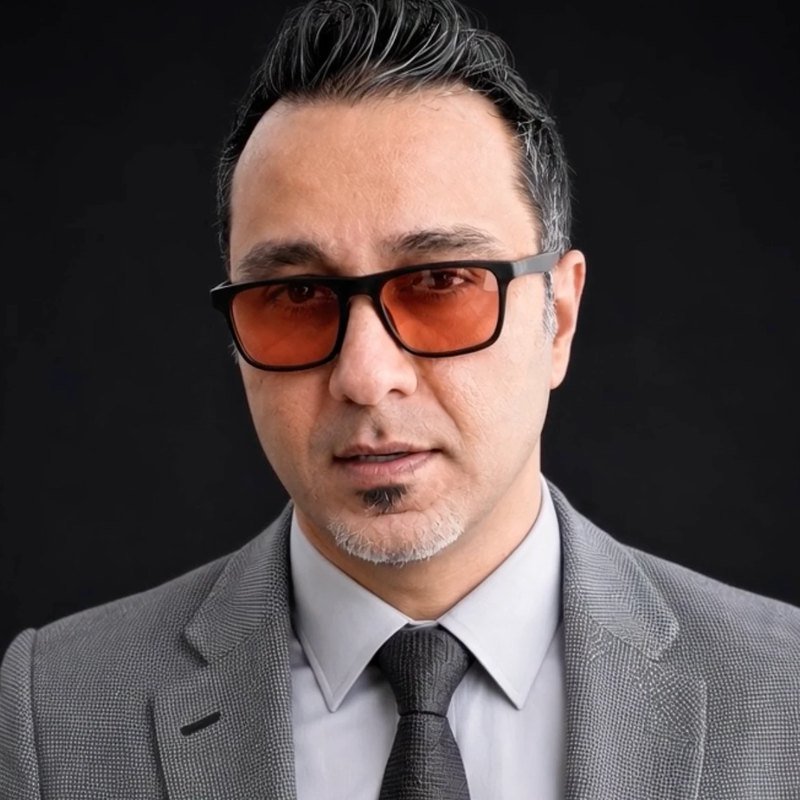
Dan Qayyum is Director at The Policy Review, editor of The Pakistan Playbook and founder of the Minds at Peace Foundation, which works to move mental health from the margins to the mainstream in South Asian communities. A media strategist and long-standing advisor to government institutions and media organisations across the region, he is writing The Other Side of Endurance, a memoir of crisis, resilience and reinvention.


