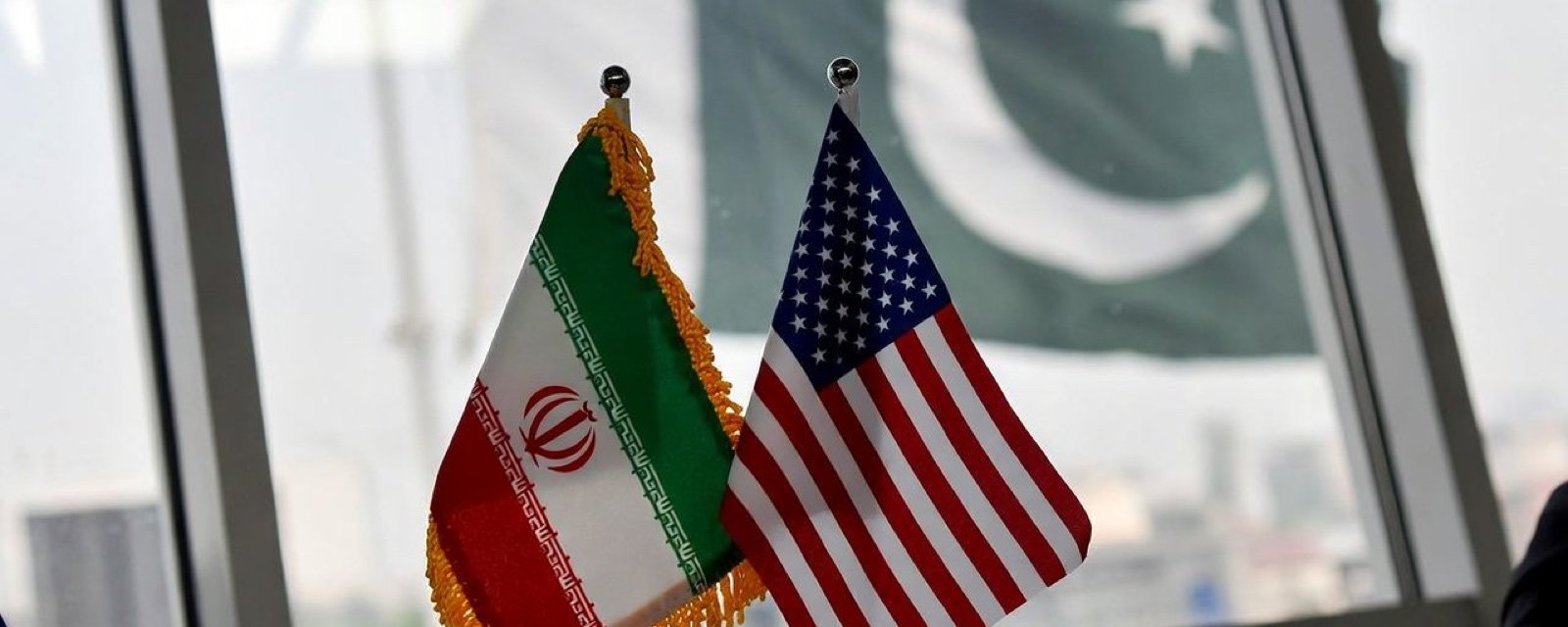
Two delegations, two of the world's most heavily armed adversaries, are now in the same city for the first time since this war began. Somewhere in Islamabad this morning, they will attempt something they have not managed in six weeks of bombing each other: a conversation.
The Iranian Delegation
Iran arrived first. That is itself a statement. And it did not arrive lean.
The delegation comprises representatives from multiple key sectors: security, political, military, economic, and legal. That breadth is deliberate. When a country sends its central bank governor to a ceasefire negotiation, it is signalling that it expects to discuss not just the guns but the money, the sanctions, the frozen assets, the full economic architecture of a post-war settlement. Iran has not come to talk about a pause. It has come to negotiate a restructuring.
Mohammad Bagher Ghalibaf, Parliament Speaker, Delegation Head
A principlist with deep roots in the Revolutionary Guard, regarded as a hardliner in complete agreement with factions that want no concessions to the United States. He spent the days before the talks posting on X about violations and demanding preconditions. On Friday he said Lebanon and Iran's blocked assets must be resolved before a single negotiation begins.
He is not there to make a deal easily. He is there to ensure that whatever emerges can be sold at home without the clerics calling it surrender. His presence provides revolutionary legitimacy to the process. He is the insurance policy, not the architect.
Abbas Araghchi, Foreign Minister
The professional in the room. A pragmatic diplomat who prefers engagement over confrontation, he was chief negotiator for the original 2015 JCPOA, advocating sanctions relief in exchange for nuclear limits. He has consistently pushed for diplomacy as the best means of protecting Iranian interests, even after the US walked away from that deal.
Ghalibaf sets the limits. Araghchi writes the text. The pair reflect Iran's internal architecture in a single delegation: revolutionary legitimacy and diplomatic competence, each watching the other.
Ali Akbar Ahmadian, Secretary of the Supreme National Security Council
The most significant security figure in the room. A career IRGC officer, Ahmadian served as deputy commander and then commander of the IRGC Navy before becoming chief of the IRGC Joint Staff, appointed SNSC secretary in May 2023. He has been sanctioned by the United States, European Union, United Kingdom, and United Nations since 2007 for his role in nuclear and ballistic missile activities, and is designated a Specially Designated Global Terrorist under US counterterrorism authorities.
Ahmadian developed a military doctrine based on asymmetric tactics and is a demonstrated loyalist of the Supreme Leader, with a direct line to Khamenei's office. His presence means the IRGC has eyes and authority in the room. No agreement can be reached that the Guard will publicly disown, because their most senior strategic voice helped negotiate it.
Abdolnaser Hemmati, Governor of the Central Bank of Iran
His inclusion is the most analytically revealing element of the entire delegation. Hemmati has served as central bank governor twice, most recently appointed in December 2025 after his predecessor resigned during the 2025-2026 Iranian protests amid a sharp fall in the rial and rising inflation. He previously served as economy minister under President Pezeshkian before being impeached by parliament in March 2025 over the country's economic crisis.
Sending the central bank governor to Islamabad tells you exactly what Iran needs from this negotiation: sanctions relief, unfreezing of blocked assets running to tens of billions of dollars, and access to the international financial system. Iran's economy has been under assault for years and the war made it catastrophically worse. Hemmati is not in Islamabad to discuss military doctrine. He is there to negotiate economic survival, and his presence signals Iran views this as the moment to settle the financial terms of a post-war order.
Members of Parliament
Several MPs are also in the delegation. Their function is political witness: they return to Tehran able to tell the Majlis directly what was said and agreed, removing the ability of hardline legislators to later claim they were deceived.
The US Delegation
JD Vance, US Vice President
A former Marine who served in Iraq in a non-combat role, Vance built his political identity around America First and a studied scepticism of open-ended foreign wars. He is also the frontrunner for the 2028 Republican presidential nomination, and that calculation is present in every word he utters in Islamabad. Iran specifically requested Vance over Witkoff and Kushner, viewing him as more open to finding an exit and more justifiable to Iranian public opinion as an interlocutor. That is an extraordinary position: chosen by your adversary because your own colleagues are too compromised to be trusted.
Steve Witkoff, US Special Envoy
A real estate developer turned diplomat, Witkoff led the pre-war nuclear negotiations in Oman and Geneva. Iran doesn't trust him, given his direct association with the talks that were underway when the bombs fell. Present for institutional continuity, operationally sidelined in the optics. His job is institutional memory and technical fluency.
Jared Kushner, Senior Adviser
Expected to present economic incentives to Iranian pragmatists while protecting US and Israeli core interests on the two walls: uranium enrichment and support for Iran-backed groups. His Israeli connections caused serious pushback from Tehran, which made clear its preference for Vance-led talks. He is in the room because Trump trusts him. In a negotiation built on symbolic signals, his presence is itself a signal, and not a reassuring one to the Iranian side.
Pakistan's Men in the Middle
Field Marshal Asim Munir, Chief of Army Staff
The quiet engine of this entire process. The ceasefire framework was negotiated directly between Munir, Vance, Witkoff, and Araghchi. He is not a footnote to the Islamabad talks. He built them. He spoke directly to Trump in late March when the opening appeared, travelled to Jeddah to manage Saudi Arabia's expectations, and maintained the channel to Tehran throughout. His political capital and his country's reputation are on the line today.
Ishaq Dar, Deputy Prime Minister and Foreign Minister
The diplomatic face of the operation. Dar travelled to Beijing for talks with Wang Yi, which analysts say carried significant weight with Tehran. In the days before the talks he engaged more than a dozen foreign counterparts and held an in-person meeting with China's ambassador. He maintains the multilateral scaffolding: China, the Gulf states, Turkey, Egypt all need to feel part of the process rather than bypassed by it.
Prime Minister Shehbaz Sharif, Host and Guarantor
With 90 minutes left on Trump's deadline to obliterate Iranian civilisation, Sharif posted on X that both sides had agreed to an immediate ceasefire. That moment will define his legacy regardless of what follows. He publicly tagged Trump, Araghchi, and Witkoff in his offer to host, making it harder for either side to privately refuse. His political legacy is now entirely tied to what happens in this building today.
Originally published on X by @DanQayyum — read the original post →