A 30-minute masterclass in diplomatic dissent, delivered with a smile, received with standing ovations, and understood by everyone except possibly the host.
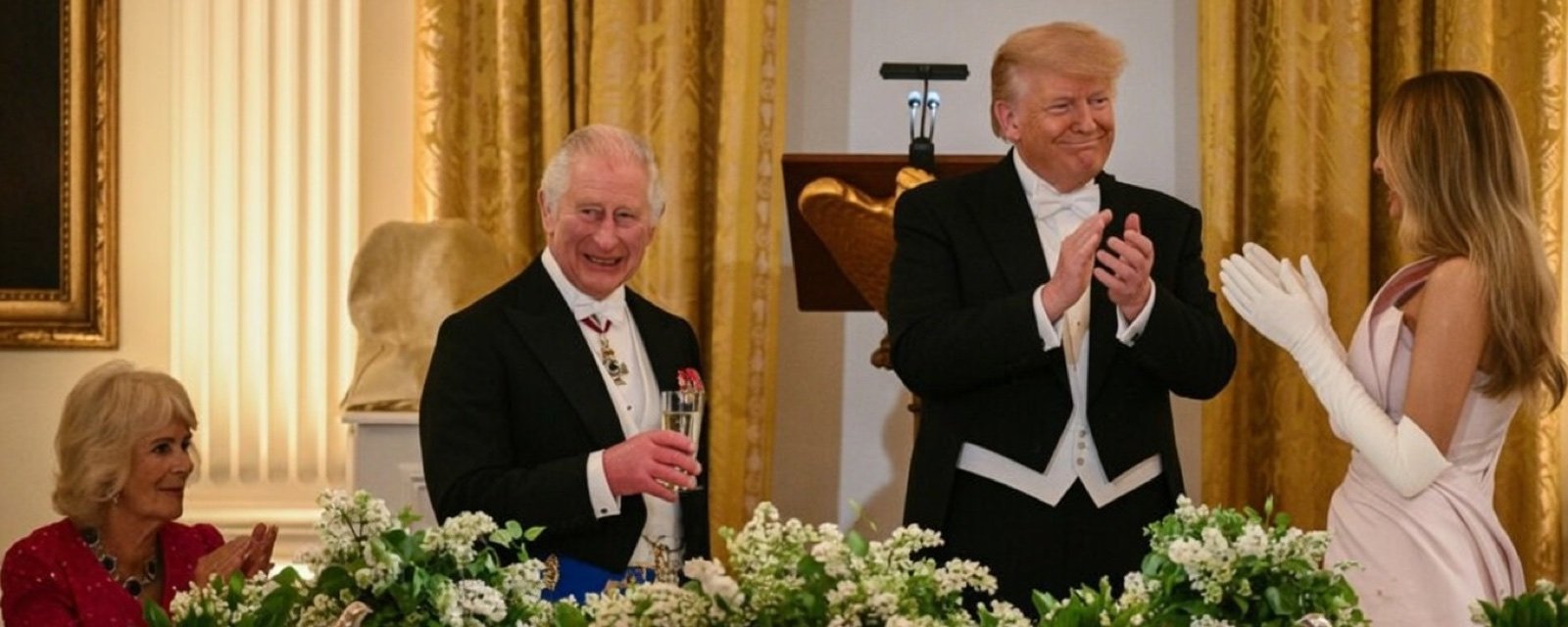
King Charles III addressed a joint meeting of the United States Congress on Tuesday. It was his 20th visit to America and his first as King. He spoke for thirty minutes. He received multiple standing ovations. He made the room laugh. He made the room think. And he said, with immaculate precision, almost everything the Trump administration does not want to hear, wrapped in so much charm and historical reference that the audience applauded the very positions their president has spent years attacking.
It was the finest piece of political speechwriting delivered anywhere in the world this year. And it deserves to be studied line by line, because almost nothing in it was accidental.
The opener
Charles began by framing the entire US-UK relationship as "A Tale of Two Georges," referencing George Washington and his own five-times great-grandfather, King George III. Then he added: "King George never set foot in America and, please rest assured, I am not here as part of some cunning rearguard action."
The room laughed. They were supposed to. The joke disarmed the audience before the knife came out.
He then described the Founding Fathers as "bold and imaginative rebels with a cause" who declared independence "250 years ago, or as we say in the United Kingdom, just the other day." More laughter. Bipartisan laughter. The kind of laughter that makes an audience trust you before you have said anything of substance.
This is the technique. Every sharp point in the speech was preceded by a joke that opened the room up. By the time the serious line landed, the audience was already nodding.
The NATO correction
Trump has repeatedly attacked NATO allies, claiming in one social media post that NATO "wasn't there when we needed them and won't be there if we need them again." He has said allied troops in Afghanistan "stayed a little back" from the front lines. Canadian veterans called the remarks "awful and despicable." British veterans pointed out that Prince Harry, the King's own son, did two tours in Helmand Province, one of the most dangerous Taliban strongholds in the country.
Charles addressed this without naming Trump, without naming the posts, and without raising his voice. He simply said: "In the immediate aftermath of 9/11, when NATO invoked Article 5 for the first time, we answered the call together, shoulder to shoulder, through two world wars, the Cold War, Afghanistan, and moments that have defined our shared security."
Shoulder to shoulder. The phrase was chosen with surgical care. It directly contradicts "stayed a little back" without quoting it. Every veteran in the room and watching at home heard the correction. The man being corrected applauded.
The climate line
Trump has pulled the US out of the Paris Agreement. His administration has rolled back environmental protections. The word "climate change" is politically radioactive in Washington.
Charles never said it. He said "disastrously melting ice caps of the Arctic." He spoke about protecting "nature." He talked about conservation. He deployed every synonym available to describe the crisis without using the two words that would have triggered a political reflex in the room. The substance was identical. The language was carefully chosen to bypass the filter. Congress applauded a climate speech without realising they were applauding a climate speech.
The Middle East reference
This was the sharpest line in the entire address, and it went past most of the commentary.
Charles referenced his mother's 1957 visit to Washington during the Eisenhower administration, noting that "not the least of her tasks was to help put the special back into our relationship after a crisis in the Middle East." He then added: "Nearly 70 years on, it is hard to imagine anything like that happening today."
The room laughed. They should not have. The 1957 crisis was the Suez Canal debacle, which nearly destroyed the US-UK relationship. Charles was standing in front of the president whose war in the Middle East has created the worst tensions between London and Washington in decades. He referenced the historical parallel, denied its applicability with a smile, and let the audience draw their own conclusions. The irony was visible to anyone paying attention. The applause came anyway.
The gift
Charles presented Trump with the original bell from HMS Trump, a British submarine launched in 1944 that served in the Pacific War. He said: "Should you ever need to get hold of us, just give us a ring."
The audience laughed. Trump laughed. It was a warm, generous, perfectly timed joke. It was also, underneath the warmth, a reminder that Britain named a submarine after the Trump family before Donald Trump was born, that the Royal Navy has a longer institutional memory than any presidency, and that the "special relationship" predates and will outlast any individual occupant of the White House.
Trump later said he was "very jealous" of the speech.
What Charles actually did
He praised NATO in front of its loudest critic. He championed climate action in front of a climate denier. He called for interfaith dialogue during an administration that has banned citizens from Muslim-majority countries. He praised checks and balances on executive power to a room full of lawmakers who have been unable to exercise them. He referenced the Middle East crisis that is currently straining the alliance he was there to celebrate. He defended the Royal Navy after Trump publicly insulted it. And he did all of this while receiving standing ovations, bipartisan laughter, and a dinner invitation.
The Oscar Wilde quote he deployed midway through captures the entire performance: "We have really everything in common with America nowadays except, of course, language."
He meant it literally. He and Trump were speaking the same words in the same room about the same subjects and meaning entirely different things. The audience heard what they wanted to hear. Charles said what he needed to say. And the applause confirmed that the art of disagreeing in public, gracefully, intelligently, and without ever raising your voice, is alive and well and living in Buckingham Palace.
Trump said he was "very jealous." He should be. ■
Originally published on X by @DanQayyum — read the original post →