For a people who have spent decades correcting the world's assumptions about them, today feels different.
Somewhere in Birmingham right now, a Pakistani teenager is watching a news ticker and texting her mother in Lahore a single word: finally.
She does not need to explain which finally. Her mother knows. Every Pakistani knows. The finally that has been accumulating since the first time someone at school asked where they were from and the answer required a disclaimer. Every Pakistani knows that pause. It arrives before the name does. A calculation disguised as a hesitation: how much does this person already know, how much will need correcting, where does the explanation begin. It is not shame. It was never shame. It is the exhausting arithmetic of being misread so many times that the correction becomes automatic. The finally that lives in that pause, in the breath taken before the country can simply be itself.
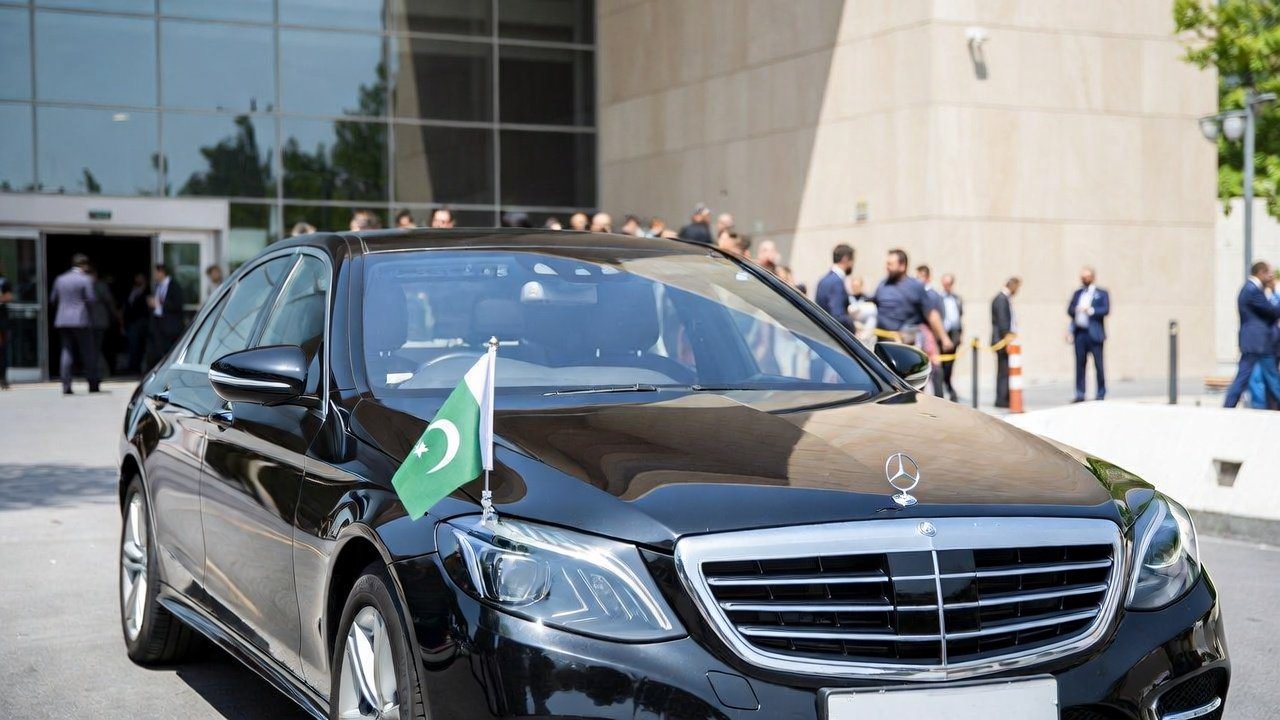
Pakistan announced the end of a war today.
Not Washington. Not Tehran. Islamabad.
Prime Minister Shehbaz Sharif posted on X: "Following intensive talks, we are pleased to announce that the Peace Deal between the United States of America and the Islamic Republic of Iran has been REACHED." Trump confirmed it minutes later. Iran's Supreme National Security Council confirmed it after that. The world learned that this war was over because Pakistan told it so. The official signing ceremony is Friday, June 19, in Switzerland. The document both sides will sign carries the name of the city where the work was done.
It is called the Islamabad Memorandum of Understanding.
A few weeks ago, I wrote a piece called "Not Arabs. Not Indians. Just Pakistanis." It reached a million people in three days. Ministers shared it. The PM's spokesman called it the finest introduction to Pakistan he had read. Pakistanis from Karachi to Chicago to London wrote in to say they had forwarded it to colleagues, to friends, to the person at the dinner table who had asked the wrong question one too many times. They said they felt, for the first time in a long time, seen. Heard. Correctly named.
That piece was the explanation. Today is the proof.
How a country steps up for this
The countries that broker wars of this weight are chosen because they hold two qualities simultaneously: genuine access to both sides, and the credibility to keep a room together when it wants to fall apart.
Pakistan's relationship with the United States runs the length of Pakistan's existence. Through alliances and ruptures, aid suspensions and back-channel dependencies, every iteration of the relationship's complicated accounting, the line between the two capitals never fully closed. Pakistan's relationship with Iran tracks from 1979, from the revolution that rearranged the region and left Pakistan as one of the few countries maintaining functional ties with Tehran across every subsequent decade of Western sanctions and isolation. Gulf capitals whose quiet participation in any framework like this is itself structural gave Pakistan their trust. When Pakistan's army chief holds a brief, both Washington and Tehran understand whose word is actually being offered.
The country that pulled this off has been fighting the Afghan Taliban on its western flank simultaneously, a Taliban India had been cultivating as a strategic asset while Pakistani mediators were on planes. The coordinated media pressure ran in parallel: CBS, American commentators, Indian primetime, the machinery that activates whenever Pakistan is close to something the world's preferred story cannot accommodate. The Foreign Minister flew to Beijing with a fractured shoulder because the conversation could not wait. The Prime Minister did four capitals in two days. The Interior Minister was in Tehran twice in a single week. Nobody on the delegation slept more than a few hours a night for weeks.
The channel stayed open.
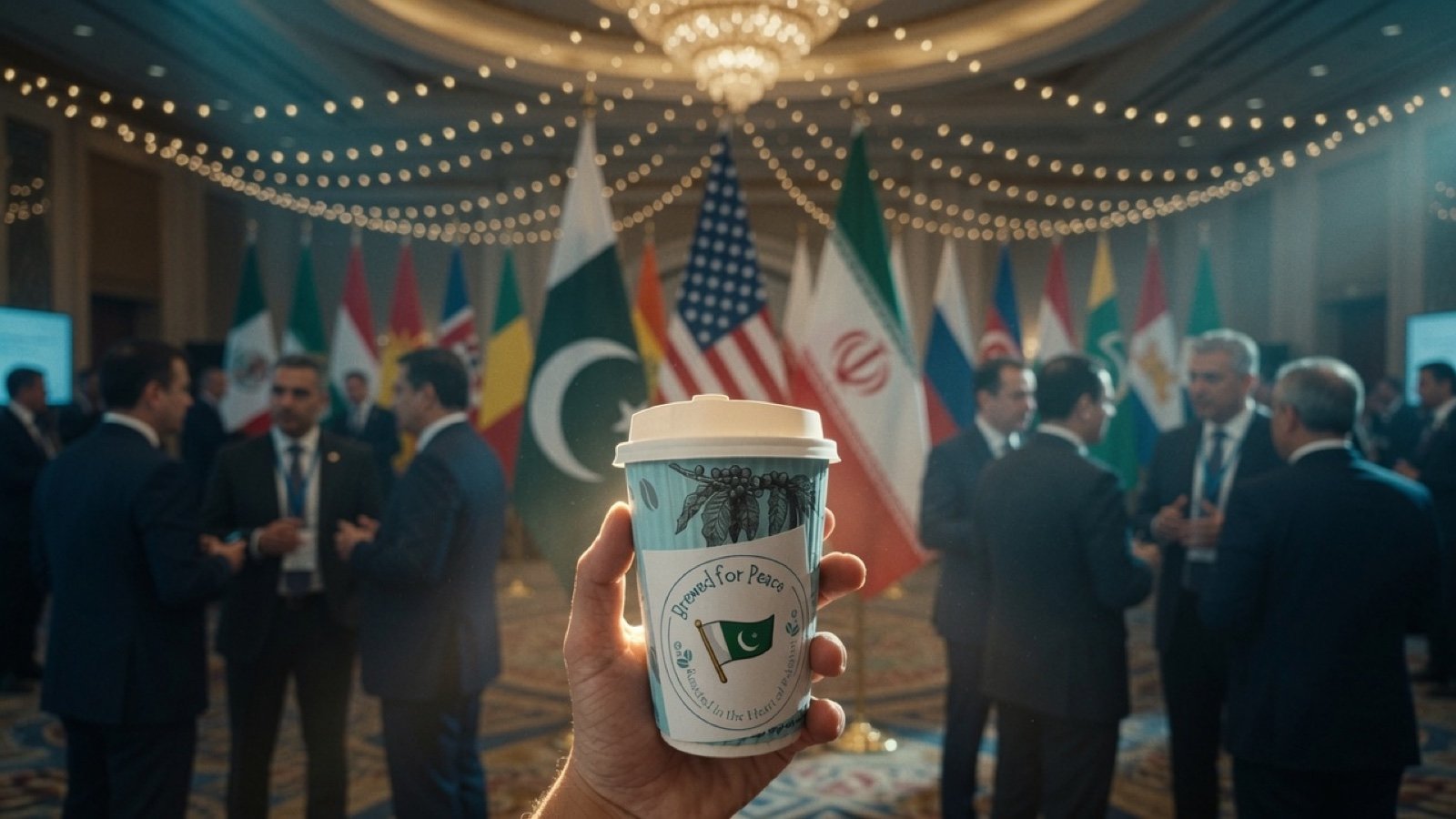
Pakistan hosted direct talks in Islamabad on April 11 and 12. Those talks stalled on the Strait of Hormuz and the nuclear question and ended without agreement. Pakistan did not leave the room. Every exchange between Washington and Tehran in the weeks that followed passed through Pakistani intermediaries. Both parties came close to resuming hostilities more than once. There were moments when the ceasefire looked like a staging ground for the next round. When Washington hardened, Islamabad held the Iranian side. When Tehran wavered, Islamabad held the American side. Saudi Arabia, Turkey, Egypt, Qatar, Abu Dhabi: all stepped in behind the Pakistani framework to hold the line. The coalition was real. The leadership was Islamabad's.
What the "Just Pakistanis" piece described as hospitality has a diplomatic equivalent. It is the refusal to walk away from a room. The capacity to absorb frustration without converting it into rupture. To hear a door slam and wait, and knock again. Pakistanis do this in their homes and workplaces. Their government did it between two powers for months, at a cost nobody fully tallied, for people who were not theirs to save.
That last part matters. Pakistan did not enter this because it had no choice. It entered because it could not watch and do nothing. That instinct, to show up for strangers, to treat another people's emergency as a personal obligation, runs so deep in Pakistani culture it does not register as a choice. It registers as the only option. The "Just Pakistanis" piece tried to describe it. The Islamabad MOU confirms it.
The inheritance
Western capitals spent the 1970s and 1980s describing Pakistan as an economic basket case. Unable to feed itself. Certainly incapable of making its own strategic choices. The lesson was repeated until it became liturgy.
And yet Pakistan built a credible nuclear deterrent, joining a handful of states that possess one, all of them far richer, all of them given decades longer and faced with far less.
And it wasn't easy. Pakistanis ate less. They paid more. They lived through years of being told they were failing while delivering what every detractor said was impossible. The deterrent that came out of those years changed the subcontinent's strategic calculus permanently. It is also part of why both governments came to Islamabad. A country that built its own strategic survival from nothing is the country credible enough to broker the strategic survival of others.
This week sits in the same family. The discipline and single-mindedness that built the deterrent also built the mediation. The chorus declaring both impossible was the same.
So was the answer.
What the people at home have paid
Through these months the economy has been a daily firefight. Officials pulling sixteen-hour shifts on the fiscal brief have kept it from fragmenting. Ordinary Pakistanis have paid the price in fuel queues, delayed power, the highest fuel surcharges in the region, a rupee that has refused to behave.
They have paid it without complaint, because ordinary Pakistanis have always understood, before the politicians explain it and after the economists have finished arguing about it, that some things cost what they cost and the bill still has to be paid. They have done this before. The deterrent cost them the same.
Pakistan entered this mediation with its western flank under active pressure, its eastern flank still settling from a military confrontation with India, its economy in a fight of its own. The practical case for staying out was available to anyone who wanted to make it.
Pakistan made the opposite case, and the people at home carried it.
What changes now
The MOU extends the ceasefire, reopens the Strait of Hormuz, and creates the sixty-day framework for follow-on negotiations. The harder conversations, on nuclear posture, on Lebanon, on the architecture of a durable peace, will take years. Pakistan will likely be in those rooms too. But something else changed today, faster and more personally than any diplomatic communiqué can capture, and it changed for every Pakistani alive.
For decades, Pakistanis have been filed under terrorism, instability, nuclear anxiety, failing state, a country defined almost entirely by what it has been accused of and almost never by what it has actually done. Every Pakistani who built a life abroad carried that filing with them. Produced it, unbidden, at border crossings and job interviews and dinner parties, pre-emptively, the way people learn to apologise for things that are not their fault.
The doctor in Chicago who forwarded the "Just Pakistanis" piece to her entire department. The accountant in London who sent it to his team on a Monday morning with no message, just the link. The teacher in Lahore who printed it and put it on the staffroom wall. The trader in Karachi who shared it across six WhatsApp groups before breakfast. They were all doing the same thing: handing someone the evidence of something they had known their whole lives and never quite had the words for.
They knew who they were. They just needed the world to catch up.
Today, the world caught up.
The document both sides will sign on Friday is called the Islamabad Memorandum of Understanding. It was not named by Pakistanis. It was named by the parties, because the parties knew where the work had been done. It sits now in the permanent record of how this war ended, in the same archive as every treaty, every armistice, every agreement that pulled the world back from the edge. Pakistan's name is on it. Islamabad's name is on it.
And the world did not learn it was over from Washington. It did not learn it from Tehran. It learned it from Islamabad, at the moment Pakistan chose to tell it, in a post that went around the planet in minutes.
The teenager in Birmingham is still texting. Her mother in Lahore is crying, the way Pakistani mothers cry when something they always knew would happen finally does, quietly, with her hand pressed to her mouth, not wanting to make a sound in case the moment disappears.
It will not disappear.
The name is Islamabad. From here, it means peace.
For blessed are the peacemakers. ■
Originally published on X by @DanQayyum — read the original post →