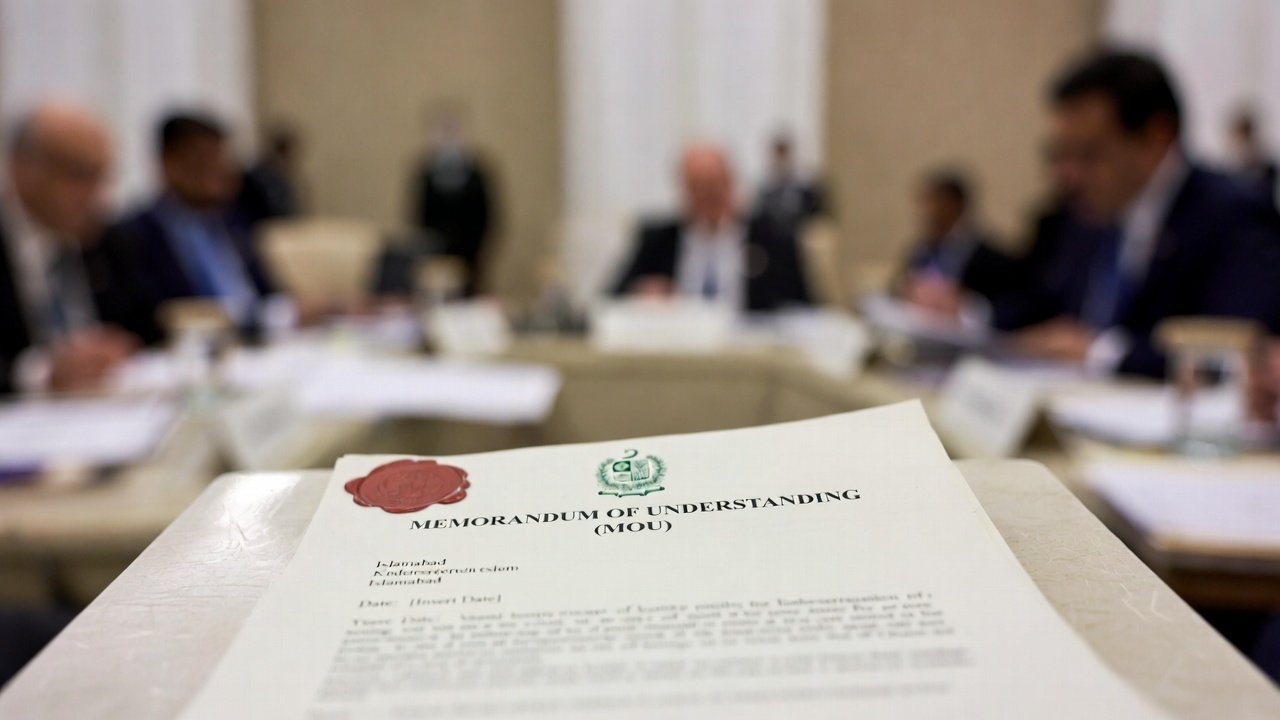
On June 16, Bloomberg published what it described as the full draft of the Islamabad MOU. Iran's negotiating team dismissed it as inaccurate, specifically citing the first clause and the Strait of Hormuz provisions. On June 17, a senior US administration official read the official 14-point text to reporters, published simultaneously by CNN and i24News. White House communications director Steven Cheung said the Bloomberg and CNN leaked versions "do not reflect the language of the actual MOU." The text has been read aloud. It has not been formally released as a signed document.
1. Oil sanctions waivers
Bloomberg: Vague on timing.
Official text, Point 10: US Treasury issues waivers immediately upon signing authorising Iran to export crude oil, petroleum products and derivatives, including associated banking, insurance and transportation services. Waivers remain in effect until sanctions are formally terminated.
2. Frozen assets
Bloomberg: No figure specified.
Iranian state media Mehr News reported $24 billion. Reuters, citing a separate Iranian official, reported $25 billion. The two Iranian versions do not match each other.
Official text, Point 11: All frozen and restricted Iranian funds and assets to be made fully available. Procedures for release and use to be mutually agreed during negotiations. Funds may be used by any beneficiary designated by the Central Bank of Iran. No dollar figure specified in the official text.
3. $300 billion reconstruction commitment
Bloomberg: Reported a minimum $300 billion reconstruction and economic development plan from the US and regional partners, conditional on a final deal.
Official text, Point 6: Confirmed. The US, in coordination with regional partners, will develop a reconstruction and economic development plan for Iran worth at least $300 billion. Implementation mechanism to be finalised within 60 days.
4. Nuclear stockpile
Bloomberg: Iran's nuclear programme described as the subject of later talks, without specifying mechanism.
Official text, Point 8: Iran reaffirms it will not procure or develop nuclear weapons. Disposition of Iran's stockpiled enriched material to be resolved through a mutually agreed mechanism. On-site down-blending under IAEA supervision specified as the baseline method. Iran's enrichment activities to be discussed within a framework agreed in the final deal.
5. US force withdrawal
Bloomberg: Not reported.
Official text, Point 4: The US agrees to withdraw its forces from the proximity of Iran within 30 days of the final deal's conclusion.
6. UN Security Council endorsement
Bloomberg: Not reported.
Official text, Point 14: The final deal is to be endorsed by a binding UN Security Council resolution.
On the Hormuz clause
Iran specifically disputed Bloomberg's treatment of this provision. Official text, Point 5: Iran will use its best efforts to ensure free passage for commercial vessels through the Strait for 60 days in both directions with no fees. Commercial traffic to resume immediately. Iran to complete demining and other technical and military measures within 30 days. Tehran to hold talks with Oman and other Gulf states on the strait's future administration and maritime services. The demining requirement and the Oman consultation mechanism were not in Bloomberg's version.
The sequencing clause — not in Bloomberg
Official text, Point 13: Once the ceasefire, naval withdrawal, Strait of Hormuz measures, oil waivers and asset release are underway, both countries will begin negotiating the remaining elements of the final deal. That sequencing is tied specifically to the continued implementation of Points 1, 4, 5, 10, and 11. Iran receives nothing on nuclear sanctions, missiles, or proxies until it delivers on ceasefire, Hormuz, and oil waivers. This provision does not appear in Bloomberg's version.
The implementation mechanism — not in Bloomberg
Official text, Point 12: Both sides agree to establish an executive mechanism to monitor implementation of the MOU and to track future compliance with the final deal. Not reported in Bloomberg's version.
What the official text does not address
Iran's enrichment level in a final deal is not specified. Iran's ballistic missile programme does not appear. Iran's proxy groups do not appear. A senior US official, speaking to Time, described the MOU as a "political document" that does not reflect back-channel commitments Iran has made on its nuclear programme, adding that Trump is prepared to restart military action if needed and that "either side can walk away at any time until you really have a fulsome binding deal."
On Bloomberg's version
Arms control analyst David Albright noted the Bloomberg text does not read like a native English-language draft from US or UK diplomatic teams and is closer to a translated document or one originating from the Iranian side. Iran called Bloomberg's version inaccurate. The official text, on the provisions where the two differ, moves further in Iran's favour than Bloomberg's draft indicated. ■