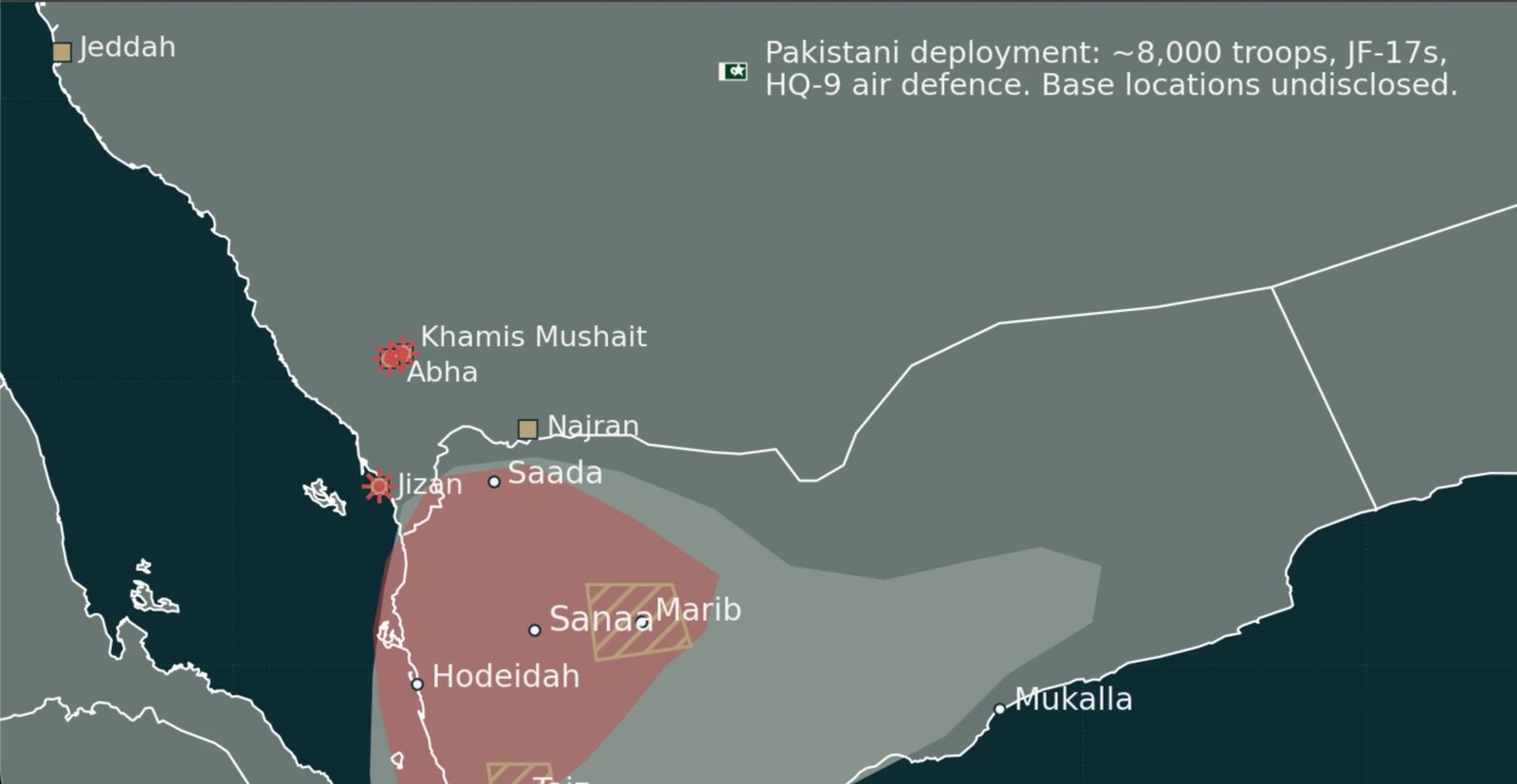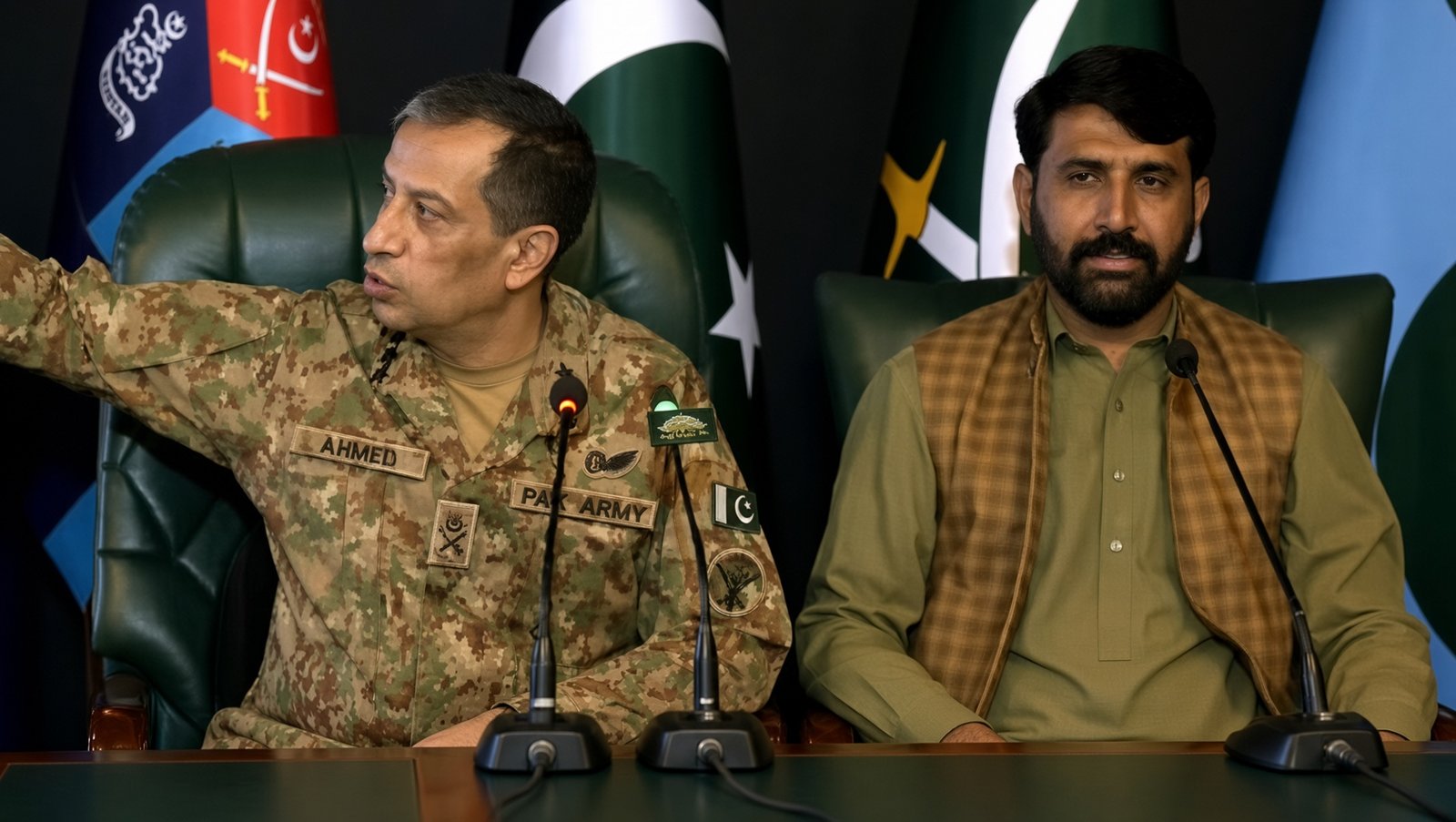
On 8 October Pakistan's military spokesman confirmed that Pakistani forces were already in Saudi Arabia, serving in what he called "multiple capabilities and domains". He gave no numbers. On 21 October, in Doha, Pakistan's defence minister signed a second agreement, this one covering the production of the weapons such commitments rely on. Both agreements are built around the same two partners, Türkiye and Pakistan, and Pakistan's timing has put it at the centre of each.
The first is the Makkah defence agreement, signed on 7 August by Shehbaz Sharif, Mohammed bin Salman and Recep Tayyip Erdogan. It commits the three to treat an armed attack on any of them as an attack on all. It was invoked within two months. On 5 October, after Houthi drones and missiles struck Saudi infrastructure, the three governments met in Riyadh and agreed to deploy forces to the kingdom. Pakistan's forces, the spokesman said three days later, were already there.
The second is the Badr memorandum, signed by Pakistan, Türkiye, Qatar and Indonesia. It contains no defence commitment. It covers joint production, technology sharing, research and training, and the capacity to supply "allied and friendly countries". Where Makkah sets out who will defend whom, Badr deals with the equipment.
What the treaty says
The Makkah text was published on 20 October, when the Turkish government submitted it to parliament for ratification. Three provisions stand out.
The first is the trigger. The attack-on-one clause sits in Article 2. Article 1 goes further, committing the parties to use "all necessary means" when a member's sovereignty or borders are "threatened or endangered". A threat is a lower bar than an attack, and the members decide when it has been met. Pakistan's parliament voted in 2015 to stay out of the war in Yemen. The current deployment follows a different judgement, made after the war reached Saudi territory, under a treaty that frames the commitment as defensive.
The second is the discretion built into the guarantee. Help for an attacked member is decided "after objective assessment" and according to "available resources", and each member makes that assessment for itself. The wording is looser than the headline clause, but Pakistan's experience suggests it matters less in practice. In May 2025, with no treaty in place, Türkiye backed Pakistan openly enough to provoke an Indian boycott of Turkish goods and tourism, and Saudi Arabia sent its minister of state, Adel al-Jubeir, to Delhi and Islamabad to help end the fighting. The discretion also protects Pakistan. If parliament or public opinion turns against a deployment, as it did over Yemen in 2015, Islamabad can set the size and shape of its contribution without breaching the treaty.
The third is duration. The agreement has no end date, and no member may withdraw until ten years after it enters into force.
Why the Gulf wants an industrial base
The war with Iran has run on without a settlement. Reports of strained American munitions stocks have reached Gulf capitals that assumed resupply would be quick. In September 2025 Israel struck Hamas negotiators in Doha, despite Qatar hosting the largest American air base in the region. Gulf governments have concluded that relying on a single supplier means relying on its politics.
Badr is Qatar's response. Türkiye contributes design, systems integration and an established export industry in drones, warships and armoured vehicles. Qatar contributes capital and a record of investment in Turkish defence firms, and hosts a Turkish military base. Pakistan and Indonesia contribute shipyards, factories, skilled labour and large domestic orders.
Several of the building blocks already exist. Türkiye is building four corvettes for the Pakistan Navy, two in Istanbul and two at Karachi Shipyard. Indonesia has co-developed a tank with Türkiye and ordered 48 of its KAAN fighters. Badr is meant to link these bilateral programmes into one network, in which a system designed in Ankara and financed from Doha can be built in Karachi or Surabaya and exported.
The partner both need
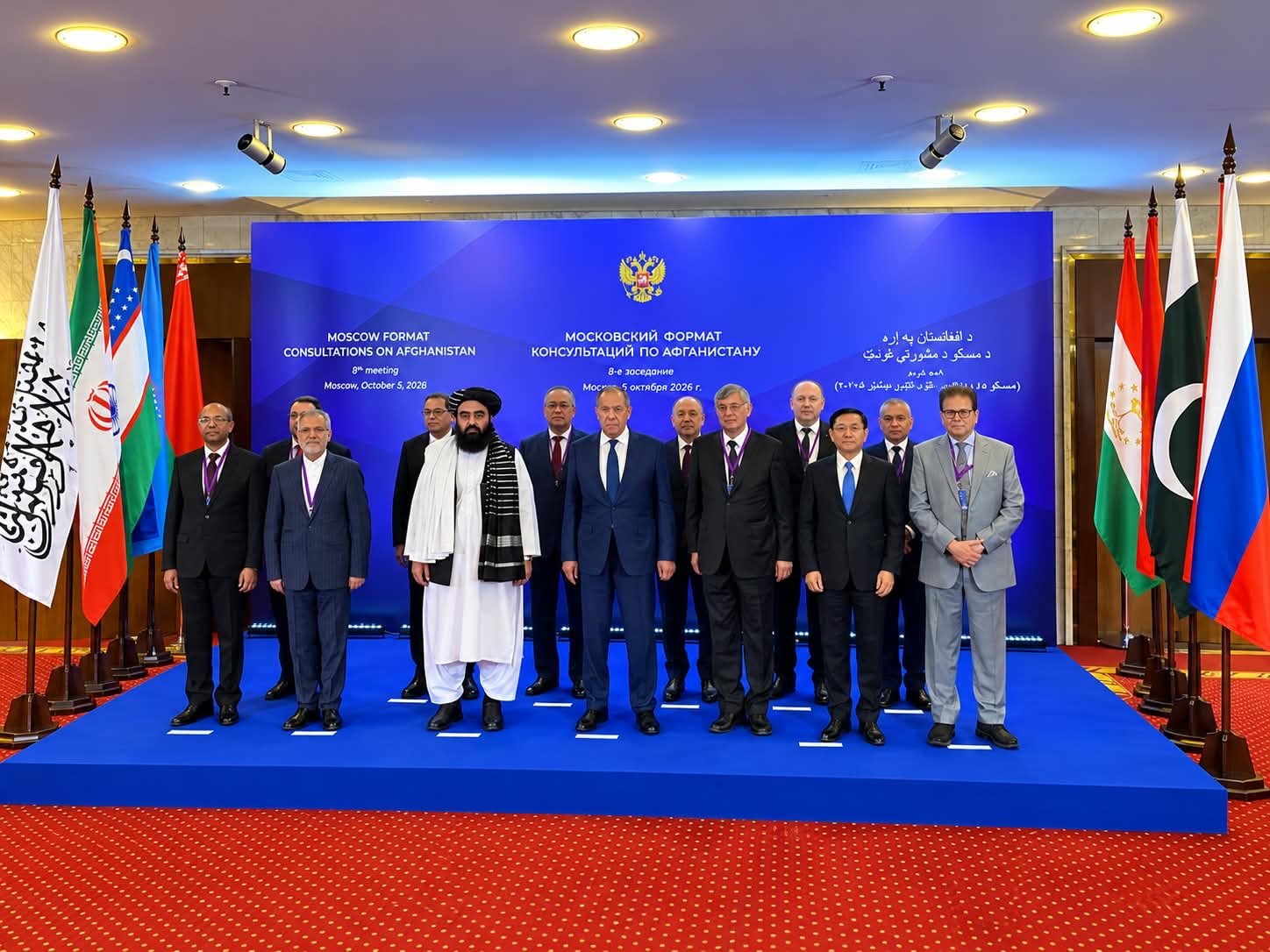
Türkiye and Pakistan sit in both agreements. Saudi Arabia is in Makkah only, and Qatar in Badr only. The two Gulf states were on opposite sides of a blockade from 2017 to 2021, and their reconciliation has held without becoming close. Each has built its security arrangement around the same two partners, and neither has joined the other's.
For Pakistan the position carries real leverage. For decades its relations with the Gulf ran in one direction, with money flowing from Gulf capitals on terms set there. Neither Riyadh nor Doha can now build its preferred arrangement without Pakistan. Its forces underpin the first, its industry is central to the second, and a Pakistani will be the first secretary-general of the Makkah secretariat in Riyadh.
It also brings obligations. Saudi and Qatari interests diverge on Iran, on political Islam and on regional mediation. Pakistan will have to manage both relationships inside formal structures, with committees and secretariats, where it previously relied on bilateral visits.
Indonesia and India
Indonesia's membership has an Indian dimension. In July, during Narendra Modi's visit to Jakarta, Indonesia agreed to buy BrahMos cruise missiles from India. It signed Badr three months later. The two decisions are compatible; Indonesia buys arms from Russia, France, America, South Korea, Türkiye and India, and diversification is settled policy. Badr nonetheless gives Pakistan a standing industrial relationship with the world's most populous Muslim-majority country, at a time when India has been courting it closely. India is unlikely to miss the overlap.
China, outside the room
China is party to neither agreement. Pakistan's air force flies Chinese-built fighters, and Chinese aircraft and missiles carried much of the fighting in May 2025. Beijing has said little in public. Yun Sun of the Stimson Center argues that China welcomes the Makkah pact as a move away from American dominance, and that, given its standing in Islamabad, the arrangement extends Chinese influence indirectly.
The Makkah text raises a practical issue. It bars members from sharing protected material with any government, company or person from a non-member state. If Badr places Turkish designs on production lines in Karachi that also work with Chinese partners, Pakistan will have to keep the two streams separate. It has operated American and Chinese equipment side by side for decades, but this is the first time the separation will be a treaty obligation.
What would make Badr real
Three indicators will show whether Badr moves beyond paper: money committed to a named project, a programme with work shared across more than two members, and a first export order.
The larger obstacle is export control. Türkiye's most advanced systems still depend on Western components, and the KAAN prototypes fly on American engines. Pakistan's 2018 order for Turkish T129 attack helicopters stalled for years because Washington withheld an export licence for the engine, and Islamabad eventually turned elsewhere. Any Turkish design built in Karachi and sold on faces the same constraint unless its components are made within the network. Badr's longer-term value lies in reducing the number of parts that require outside approval.
Turkish ratification of the Makkah agreement is the other indicator. Once it passes, the two agreements will function as layers of one system, a mutual defence commitment on top of a shared industrial base.
None of this replaces existing alliances. Qatar keeps Al Udeid, Türkiye stays in NATO, and Saudi Arabia still flies American aircraft. What has changed is that the region now has a second source of security, assembled in a few months, with Pakistan at the point where its two halves meet. Whether it holds will depend on what Badr produces, and how soon. ■