How a doctor whose roots run from Sahiwal to Rochdale became one of English football's most trusted hands, and finally a champion.
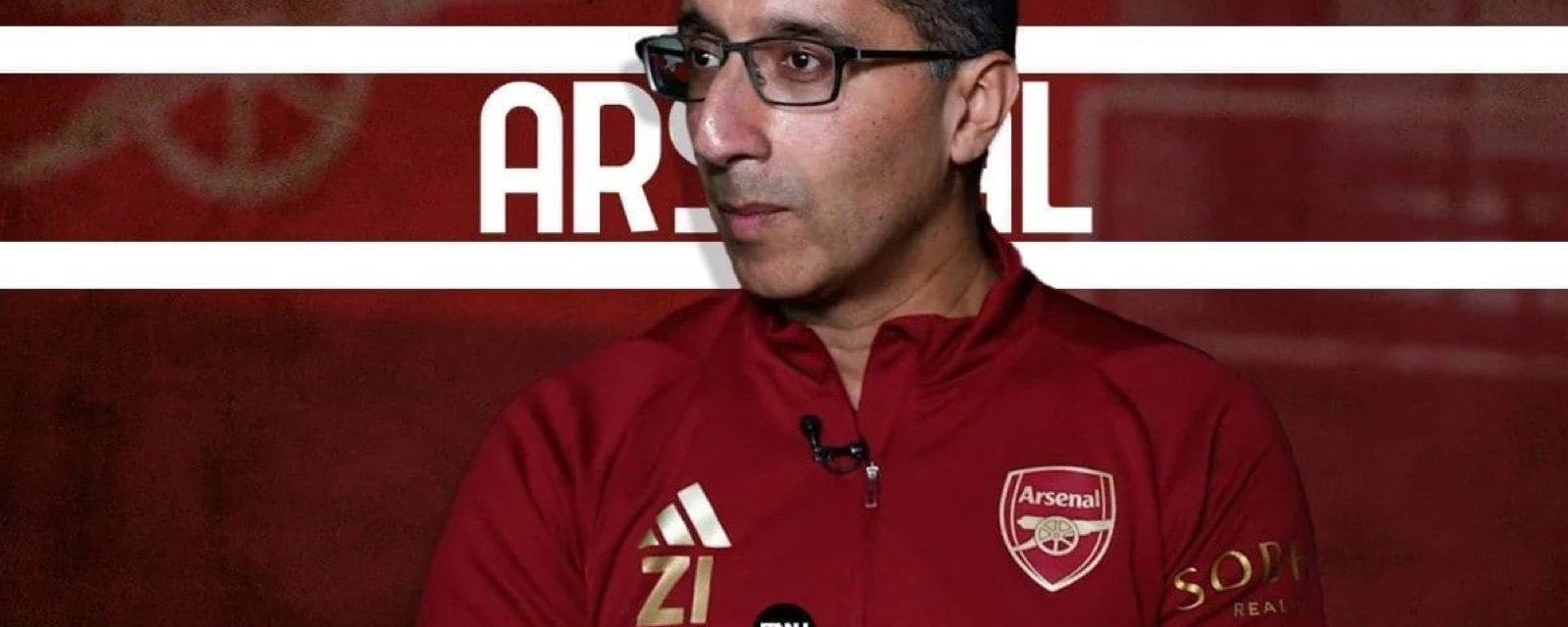
Last week, on the team coach back from Selhurst Park, Zafar Iqbal posted on LinkedIn. After twenty-one years in football sports medicine, nineteen consecutive Premier League seasons and several second-place finishes, he had finally been part of a team that won the league. The post was characteristically restrained, thanking everyone but himself. The medal he had been quietly chasing for two decades was in his hands at last.
I have known Zaf since 2013. I gave him his other crown long before he earned this one.
The Banner
I cold-emailed him in the spring of 2013. He was at Liverpool then, head of medicine at the club he had supported as a boy and somehow ended up running the medical operation for. I wrote because I admired what he had built, and because Pakistanis at the top of elite English football were rare enough that the rest of us felt obliged to find each other. He wrote back. When he came to Dubai some months later, my closest friend Nausherwan (@nausherwan_eff) and I decided we should host him properly. Nausherwan would go on to run commercial operations at Peshawar Zalmi, and that football-to-cricket instinct of his, the knack for putting the right people in the same room, eventually connected Zaf to the Pakistan Cricket Board. Zaf has since helped Zalmi and Pakistan Cricket Board players, quietly and for nothing, the way he does everything. He felt for them, so he treated them, and he never took a penny for it. None of that had happened yet on the afternoon the three of us sat down to lunch. Back then we were simply two struggling Liverpool fans and a doctor who had no idea what we were about to do to his dignity.
Properly, in our case, meant Burj Al Arab. Both of us were in the tougher years of our Dubai chapters, the kind of years where booking the most exclusive lunch in the city was an act of belief rather than means. We borrowed for it. We were lifelong Liverpool supporters and Zaf was the Liverpool doctor, and that was the equation. Lunch ran long, warm, unhurried. The friendship took.
That summer Liverpool toured Asia. We booked rooms at the team hotel in Bangkok, the Plaza Athénée, partly to see Zaf and partly because Liverpool followers at our level of devotion do what we do. The night before leaving for the trip I asked @lilmisskhawaja, a fellow red and part of the founding members of the official LFC Pakistan supporters club, to design a banner. Zaf on the Iron Throne. Above him, the words said King of Medicine.
Zaf is shy in a way you do not often find at his level of professional accomplishment. He hates attention. He would have hated the banner in advance, and did, briefly, when he saw it. We unfurled it during practice anyway. Glenn Johnson noticed first. Brad Jones, the Australian goalkeeper, came over. They asked for the banner. They took it down with them, posed for photographs with it, and brought it back to the dressing room. Lucas Leiva went one further. He posted a picture on his Instagram of himself bowing to the banner. That post went viral.
A few weeks later Steven Gerrard told BBC Asian Network that Zafar Iqbal was the king of medicine. Brendan Rodgers gave the same outlet his own tribute. The line we had written on a piece of cloth in a Bangkok hotel room had become the Liverpool captain's vocabulary. Zaf, for the record, was mortified throughout, and has remained mortified about it for twelve years.
From Rochdale to the Reigning Champions
Zafar Iqbal was born in Pakistan in November 1974 and raised in Rochdale, his family from Gojra with roots that run back to Sahiwal. He decided he wanted to be a doctor at ten years old, the year his sister was diagnosed with cancer, a choice that set the next forty years. Sports medicine came later, after a football injury of his own showed him how little specialist care existed for young athletes in working-class England.
The path up was unglamorous and earned. Amateur and semi-professional clubs first, then the England youth setup, then Leyton Orient as his first paid role. Tottenham made him a first team doctor. Liverpool, the club he had loved since boyhood, made him head of medicine, a job that should have felt like arrival and that he, characteristically, treated as a responsibility to be earned all over again. One of the first things he ever said to me, after he mentioned he had supported Liverpool since boyhood, was a small correction. I told him he must feel lucky, ending up as the doctor at the club he loved. He stopped me. Luck had nothing to do with it, he said. He had worked very hard to get there. It was not a boast. He said it the way a man states a fact he has had to defend before. I have thought about that line for years, because everything else about Zaf is so quiet that it is easy to miss how much steel sits under it.
Crystal Palace gave him a department to run. Arsenal made him Head of Sports Medicine and Performance in February 2024. Between the club jobs, and around them, he built a life in medicine that most of the football world never sees. He runs sports medicine clinics where patients come to him from across the sporting spectrum. He has worked with Kent Cricket Club. International cricketers fly to the UK to be seen by him. The badge on his coat changes with the season. The practice underneath it has been constant for two decades.
He is also Senior Lecturer in Sports and Exercise Medicine at Queen Mary University of London and co-chairs the FA Medical Society. None of this turns up on his X bio in any boastful form. He has twenty-five thousand followers and seems to remember most of them by name. He still posts in a register of restrained gratitude that suggests a man who has never quite stopped being surprised by where the job has taken him.
In British football, where every backroom hire is theatre, Zaf is the rare senior medical voice who has been quietly building institutions for two decades. Players know him. The medical establishment knows him. The wider public mostly does not. That is the way he prefers it.
The Stretches
In 2023 I herniated a disc, and for a month I could not get out of bed. Long after I could walk again, the numbness in my left leg refused to leave. Three different doctors in three different cities looked at the same MRI and arrived at the same answer, keyhole surgery, and I found I did not much fancy the idea of someone cutting into my spine on the strength of a consensus.
I flew to London. Zaf met me at the Crystal Palace training ground, where he was still running the medical department before the Arsenal move. He looked at the MRI. He looked at me. He asked me to do three stretches in front of him. Then he prescribed those three stretches twice a day for two months, and told me to come back if it had not resolved by then. If it had not, he said, surgery was the next step. He did not push. He never pushes.
I did the stretches. The numbness went. I have not had the problem since. The three doctors who had wanted to cut into my spine, including one quite senior man at a very expensive clinic, were entirely sincere in their advice. Zaf simply knew that a body of a certain age, given a certain regimen and enough patience, would solve the problem the way bodies have always solved similar problems. The captains have known this about him for years. Arsenal's players know it now. I knew it the moment my leg woke up again.
The Quieter Campaign
There is a side of Zaf the dressing rooms never see. For years he has pushed, off his own back, for things that have nothing to do with winning. Defibrillator access in community spaces. Healthier habits in children. He uses football the way he uses everything, as a way to reach people who would not otherwise listen.
He has done the same for the players who fast. A Muslim footballer breaking his fast during a match used to be something handled in silence, if it was handled at all. In April 2021, with Crystal Palace away at Leicester, Zaf and the Leicester doctor quietly asked the referee whether the game might pause at sunset so the fasting players on both sides could take a drink and something to eat. The referee agreed, the managers agreed, and they kept it low-key so nobody could accuse them of interrupting the football. A player posted about it afterwards and it went around the world. The Premier League now allows that break whenever it is asked for. A generation of Muslim players can fast without hiding it, which was all he was after.
He writes and lectures on this and a great deal else, and sits in a network of club doctors drawn from across world football, teaching across borders as readily as he treats.
It is the same instinct that makes him treat a Sunday league amateur with the care he gives an international. The badge changes. The patient never stops being the point.
The Crown Fits
Lucas Leiva's bow is still somewhere on Instagram. The banner is presumably in Glenn Johnson's loft, or Brad Jones's, or destroyed in a clear-out years ago. The BBC clip of Gerrard naming him is still online. The line "King of Medicine" went from a piece of cloth in Bangkok into the Liverpool captain's mouth and then into the broadcasting record, and twelve years later, on a team coach pulling out of Selhurst Park, the man it described finally became a Premier League winner.
Zaf will not enjoy this article. He has spent twelve years not enjoying being called the King of Medicine and is not about to start. He says he never chased the Premier League, that it makes no difference to him whether he is treating Steven Gerrard or an unknown Sunday league amateur, because they get the same care either way. That is the actual crown, and he has worn it the whole time. The medal is the newest thing about him. Everything it rewards is old. ■
Originally published on X by @DanQayyum — read the original post →